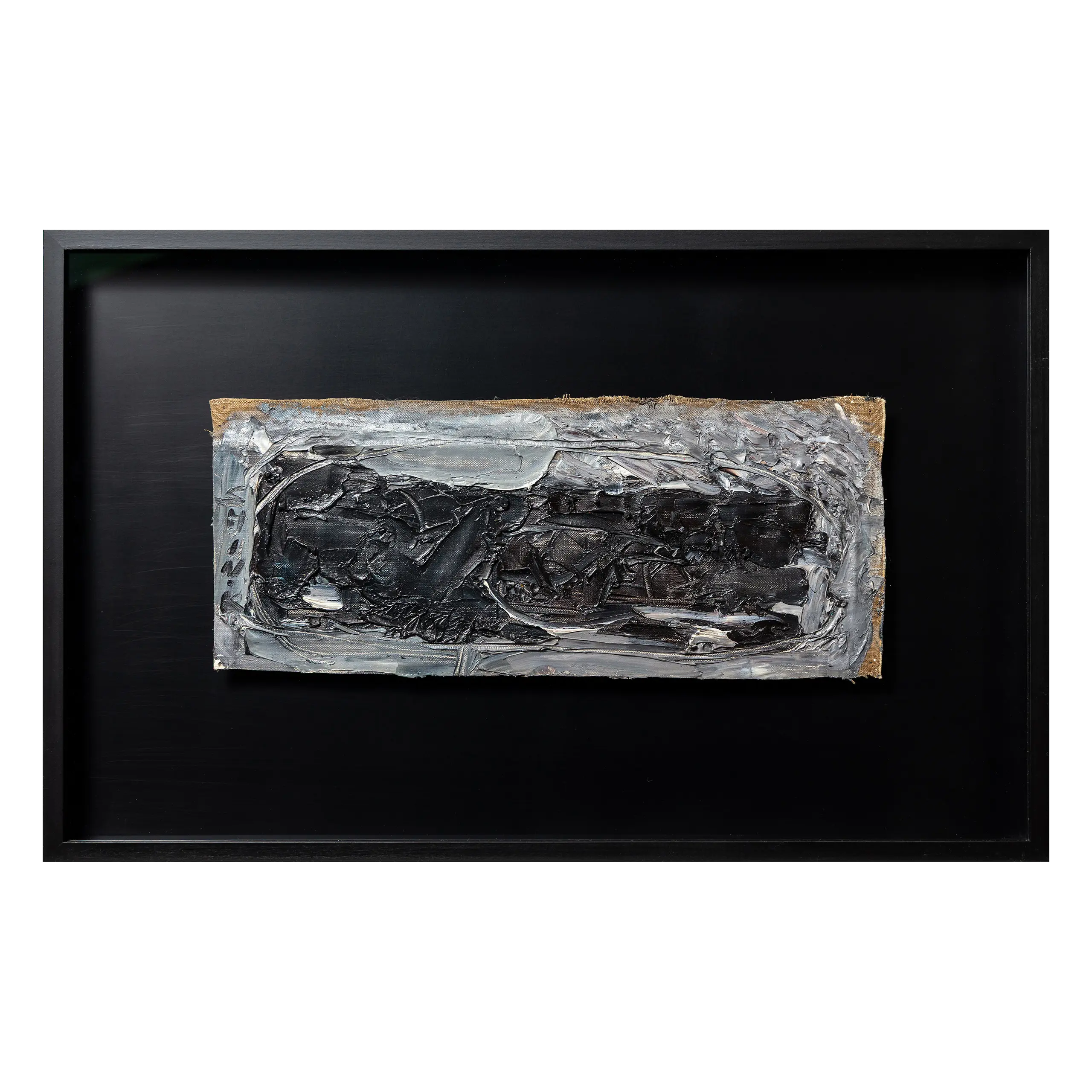
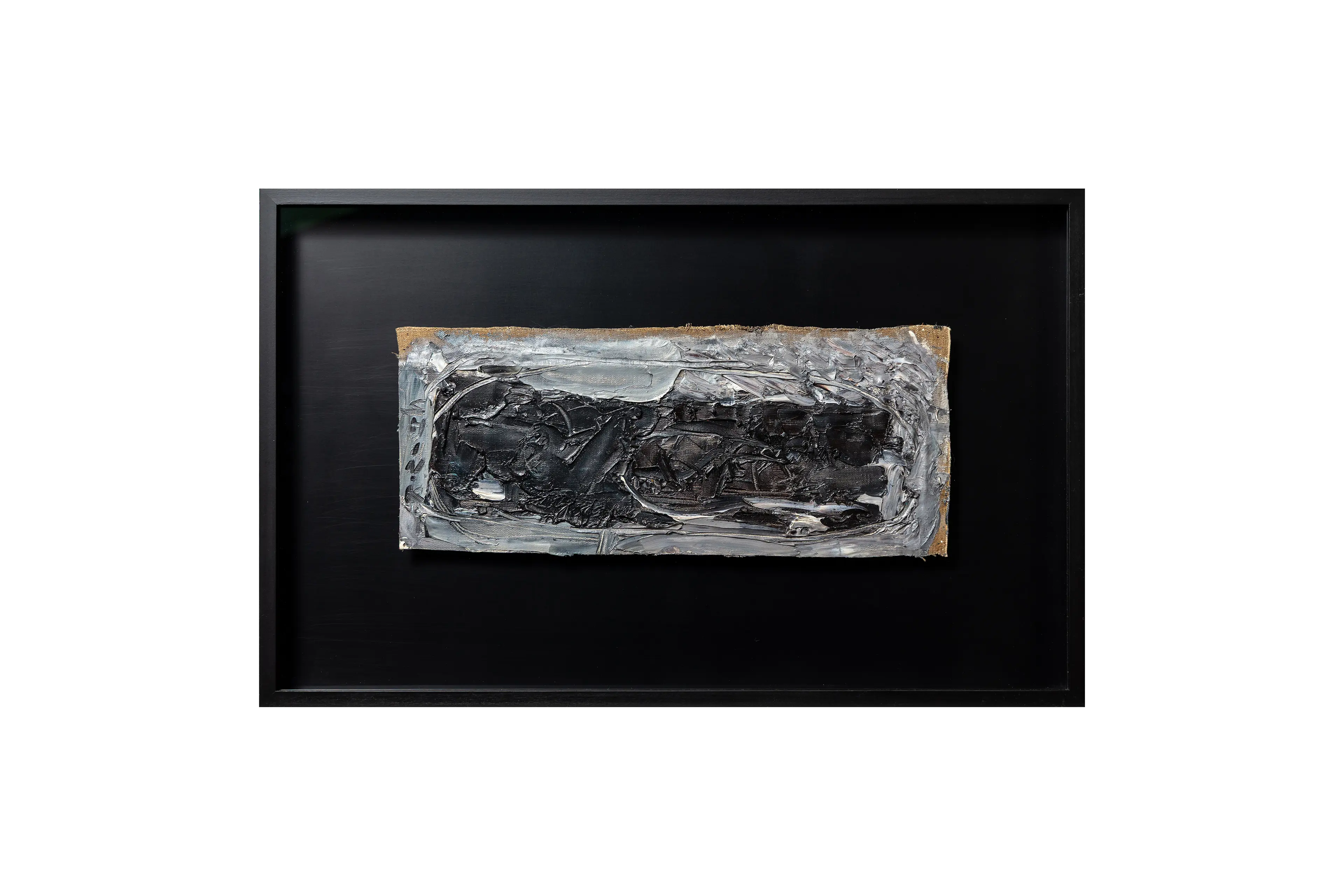
木下新(1929~2001)は、1950年代後半から1960年代初頭にかけて福岡で隆盛した前衛美術グループ「九州派」や、1960年に東京で結成された「ネオ・ダダ(ネオ・ダダイズム・オルガナイザーズ)」などに在籍していた画家です。
福岡県糸島郡に生まれた木下は、福岡文化学園絵画部を修了後、1951年に上京し、独立美術協会の洋画家・児島善三郎(1893~1962)に師事しました。木下が福岡に戻ってきたと思われる1953年には、のちに初期の「九州派」に参加する黒木耀治(1927~)や寺田健一郎(1931~1985)が共同アトリエ「青い家」を福岡市新天町に構えていますが、ほどなくして木下がそこを占拠し、自身の住居兼アトリエとして利用するようになったというエピソードが残っています。その経緯については現在も明らかになっていませんが、木下の活動拠点となったこの「青い家」には、その後、西南学院大学在学中の山内重太郎(1929~2009)や、岩田屋の楽焼コーナーでの絵付けの仕事と並行して創作活動を展開していた菊畑茂久馬(1935~2020)らが訪れ、中央美術団体に依存しない若手作家たちがつながる場となりました。
木下は菊畑と同じく岩田屋で絵付けの仕事をしつつ、独立展や福岡県美術展覧会、西日本美術展などに出品を重ね、1956年に開催された第7回西日本美術展では、厚みのあるマチエールや激しい色彩を感じさせる油彩画【汚れた空気】で西日本新聞社賞を受賞しました。1957年には上述の通り「九州派」に参加しますが、同年に再び上京し、その翌年からは「ネオ・ダダ」に加入しています。また、1964年にはニューヨークに渡り、さらに1974年からはパリへと、その拠点は作風とともに目まぐるしく変遷しました。
「ネオ・ダダ」へ加入後は、読売アンデパンダン展を中心に、このグループが掲げた「反芸術」にふさわしい実験的な作品を発表していきます。1962年の第14回展では、圧縮された鉄材の塊から自転車が立ちあがっているという、フランスの彫刻家・セザール(1921~1998)を思わせるオブジェ【裸婦】を出品しています。一方、渡米後の1967年からは、のちに【マテンロー】と名づけられるシェイプト・キャンバス(一般的な四角形のキャンバスではなく、変形的な形を持ったキャンバス)の制作を始めており、「九州派」時代とも、「ネオ・ダダ」時代とも異なる、ハード・エッジな画風を展開しました。このように、様々なグループや土地を渡り歩いて変化を遂げてきた木下の画業は、特定の系譜に位置付けることの難しい独自性をはらんでいます。最終的な拠点がパリに落ち着いてからも、その創作意欲は尽きることなく、晩年は綿布を使った制作にも挑戦していました。発表の有無にかかわらず、生涯をかけて自分なりの造形を生みだし続けた作家だったと言われています。
Shin KINOSHITA (1929–2001) was a painter associated with avant-garde groups including Kyushu-ha, active in Fukuoka Prefecture from the late 1950s to the early 1960s, and Neo Dada (Neo Dadaism Organizers), formed in Tokyo in 1960.
Born in Itoshima District, Fukuoka Prefecture, Kinoshita graduated from the painting department of Fukuoka Bunka Gakuen and moved to Tokyo in 1951 to study under the Western-style painter Zenzaburo Kojima (1893–1962) of the Independent Art Association. In 1953, around the time Kinoshita returned to Fukuoka, Yoji KUROKI (1927–) and Kenichiro TERADA (1931–1985), who would later join the early Kyushu-ha, set up a shared studio called the "Blue House" in Shintencho, Fukuoka City. Kinoshita soon took over the space and used it as both his home and studio. The "Blue House" became his base and a gathering place for young artists working outside central art organizations, drawing figures such as Jutaro Yamauchi (1929–2009), then a student at Seinan Gakuin University, and Mokuma KIKUHATA (1935–2020), who was making work while employed in pottery painting at the Rakuyaki corner of Iwataya Department Store.
Like Kikuhata, Kinoshita worked in pottery painting at Iwataya while also showing in independent exhibitions, the Fukuoka Prefectural Art Exhibition, and the Nishi-Nihon Art Exhibition. At the 7th Nishi-Nihon Art Exhibition in 1956, he received the Nishi-Nihon Newspaper Company Award for the oil painting "Polluted Air", notable for its thick materiality and intense color. He joined Kyushu-ha in 1957, returned to Tokyo that same year, and entered Neo Dada the following year. In 1964 he moved to New York, and in 1974 to Paris, shifting his base of operations and his artistic approach in quick succession.
After joining Neo Dada, Kinoshita presented experimental works aligned with the group's anti-art stance, focusing on venues such as the Yomiuri Indépendant Exhibition. At the 14th exhibition in 1962, he showed the object "Naked Woman", reminiscent of the French sculptor César (1921–1998), in which a bicycle emerges from a compressed mass of iron. From 1967 onward, after relocating to the United States, he produced shaped canvases later called "Matenro (skyscraper)", in a hard-edged style distinct from both his Kyushu-ha and Neo Dada periods. Even after Paris became his final base, he continued to work actively and, in his later years, turned to cotton cloth as a material. Throughout his life he kept making art on his own terms, whether or not the work reached exhibition.