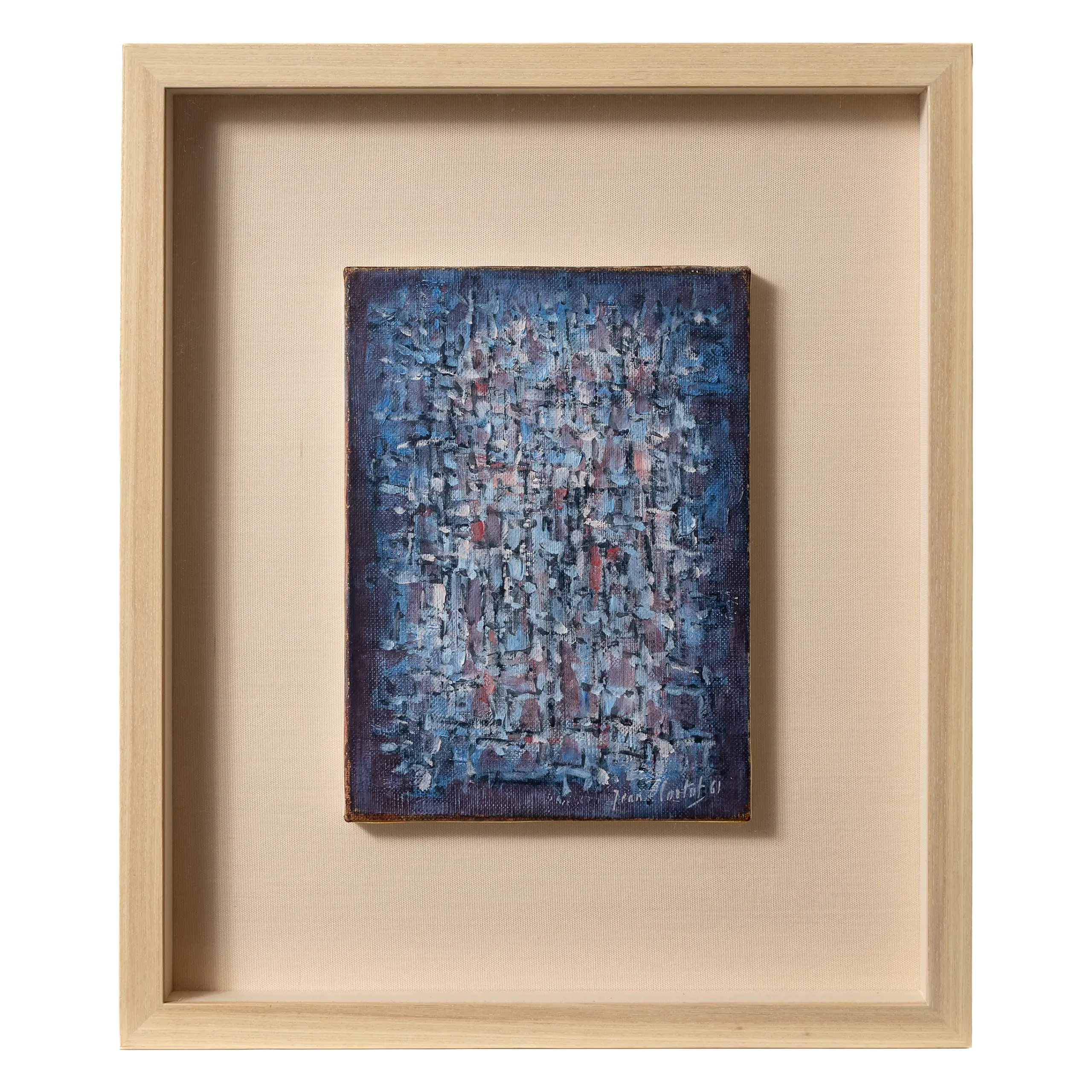
ジャン・コルトー(1925~2018)はフランスの抽象画家であり、詩人や文筆家としても活躍した芸術家です。
エジプトのアレクサンドリアに生まれたコルトーは、ショパンの名手であるピアニストのアルフレッド・コルトー(1877~1962)を父に持ち、子どもの頃から音楽や美術、文学に囲まれた家庭環境で育ちました。詩人のポール・ヴァレリー(1871~1945)や画家のアンリ・マティス(1869~1945)といった錚々たる芸術家にも、家族の交友関係を通じて接触する機会を得ています。17歳になると、パリ6区にある美術学校アカデミー・ドゥ・ラ・グランド・ショミエールに入学し、フォービスムで知られるフランスの画家オトン・フリエス(1879~1949)に師事しました。第二次世界大戦中の占領下ではフランス博物館の行政機関に勤務し、終戦後はモンパルナスにアトリエを構え、その地で生涯を通じて創作に取り組みました。
コルトーの画家としてのキャリアは1948年に始まり、初期の10年間は、風景画や静物画、肖像画といった具象的な作品を多数手がけていましたが、次第に図形や記号を用いた抽象表現に移行していきました。1959年に始まった《Correspondances(書簡、通信文)》シリーズは、彼の作品に初めて文字が登場した点で重要であり、この新しい方向性は、1967年以降のシリーズ《Écritures(文書、書類)》においてさらに確立されていきました。
このように、絵画に言葉を取り入れる姿勢は、彼が自らを「文章の捕食者」と呼ぶほど熱心な読書家で、教養豊かな芸術家であったことに由来しています。また、1974年以前にコルトーが描いた記号や文字は、彼が生み出した架空の表現ですが、こうした表意文字の創造は、1952年に父のアルフレッドの日本公演に同行した経験が影響を与えているのではないかと指摘されています。ちなみに、アルフレッドは公演先の一つであった山口県に赴いた際、宿泊先の川棚の美しさに魅了され、帰国後も幾度となく「カワタナにある夢の島」を周囲に語るほどでした。そうした土地のつながりは、息子であるコルトーの代にも引き継がれています。
コルトーの作品にはシュルレアリスムやパウル・クレー(1879~1940)の詩画作品などからの影響も認められていますが、特定の芸術運動に属することはなく、あくまでも自身の知識や関心、経験に基づいて内面世界を描きだし、具象と抽象の対立を超越していったのです。1974年から、作品内の文字は判読できるものになっていき、鑑賞者は時間をかけて作品を解読することを求められました。1980年代以降は、敬愛する文学者たちの哲学的、あるいは詩的な文章を画面いっぱいに書きこみ、彼らへの敬意を表した「描かれた写本」とでも呼ぶべき作品を多数生み出しています。
特に創作の源泉となった詩と哲学は、それぞれコルトーの想像力と思考に働きかけ、感覚的であると同時に知的さを備えた個性あふれる作品へと昇華されていったのです。
Jean CORTOT (1925–2018) was a French abstract painter who was also active as a poet and writer.
Born in Alexandria, Egypt, CORTOT was the son of the pianist Alfred Cortot (1877–1962), a renowned interpreter of Chopin, and grew up in a household surrounded by music, art, and literature from an early age. Through his family's social circle, he also had opportunities to meet leading figures such as the poet Paul Valéry (1871–1945) and the painter Henri Matisse (1869–1945). At the age of seventeen, he enrolled at the Académie de la Grande Chaumière, an art school in the 6th arrondissement of Paris, and studied under the French painter Othon Friesz (1879–1949), known for his work in Fauvism. During the occupation in World War II, he worked for the administrative body overseeing French museums, and after the war he established a studio in Montparnasse, where he continued to work for the rest of his life.
CORTOT's career as a painter began in 1948. During his first decade, he produced many figurative works, including landscapes, still lifes, and portraits, but he gradually shifted toward abstract expression using geometric forms and signs. The series "Correspondances (letters and correspondence)", which he began in 1959, is significant as the first point at which words appeared in his work, and this new direction was further established in the series "Écritures (writings and documents)" from 1967 onward.
This approach of bringing language into painting stemmed from his life as an avid reader and cultivated artist—so much so that he called himself a "predator of texts." The signs and letters CORTOT painted before 1974 were invented expressions of his own creation, and the development of these ideographic forms has been linked to his experience accompanying his father on a concert tour of Japan in 1959. Alfred, on visiting Yamaguchi Prefecture for one of the performances, was so taken by the beauty of Kawatana, where he stayed, that after returning home he often spoke to those around him of "the dream island in Kawatana." Such ties to the place were carried on into the next generation through his son.
Influences from Surrealism and from the poem-paintings of Paul Klee (1879–1940) can also be seen in CORTOT's work, yet he belonged to no particular artistic movement. Instead, he drew on his own knowledge, interests, and experience to render an inner world and move beyond the opposition between figuration and abstraction. From 1974 onward, the words in his paintings became legible, and viewers were invited to take time to decipher the works. From the 1980s, he filled his canvases with philosophical or poetic passages by writers he admired, producing numerous works that might be called "painted manuscripts" paying tribute to them.
Above all, the poetry and philosophy that fueled his practice acted on his imagination and thought alike, transforming them into distinctive works that were at once sensory and intellectual.