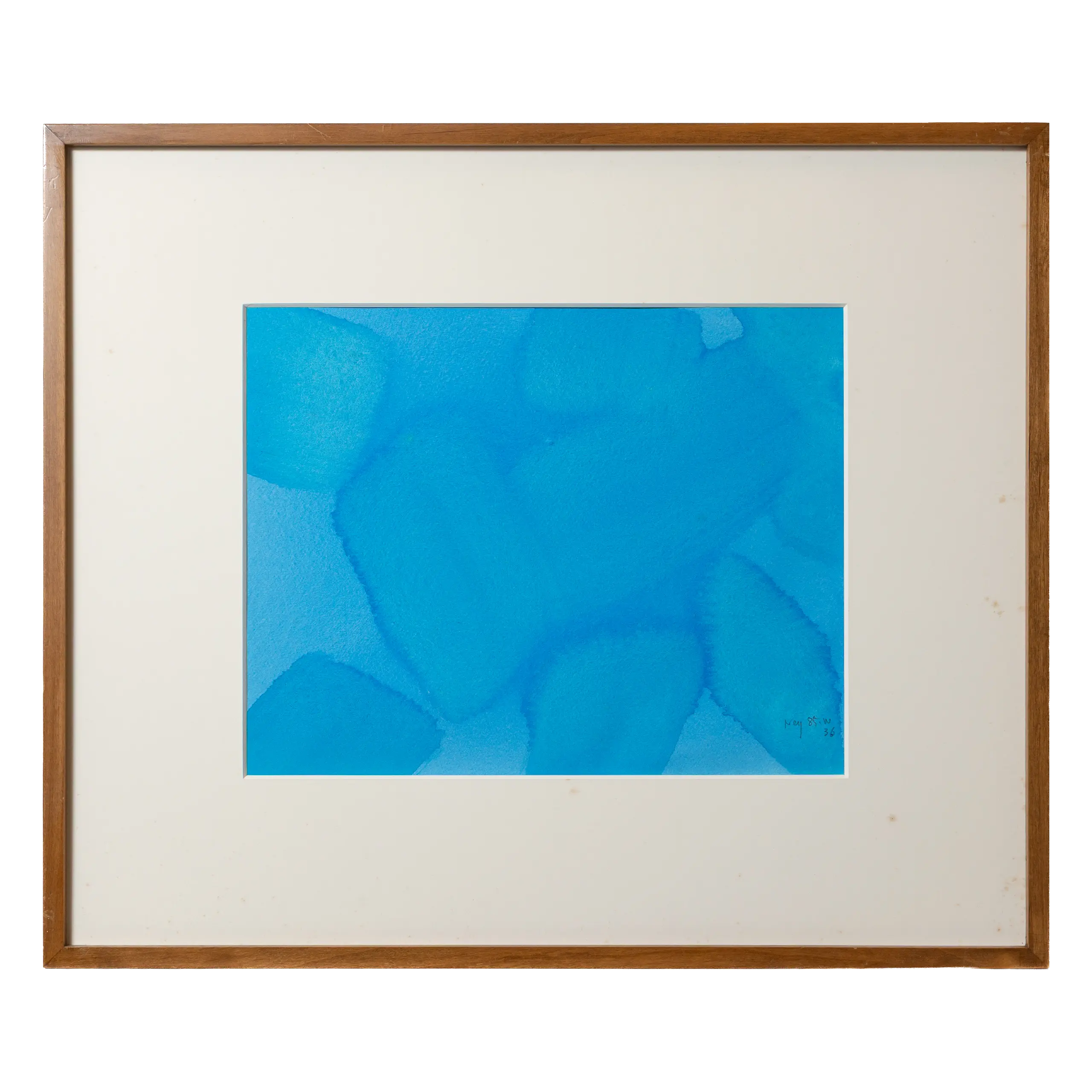
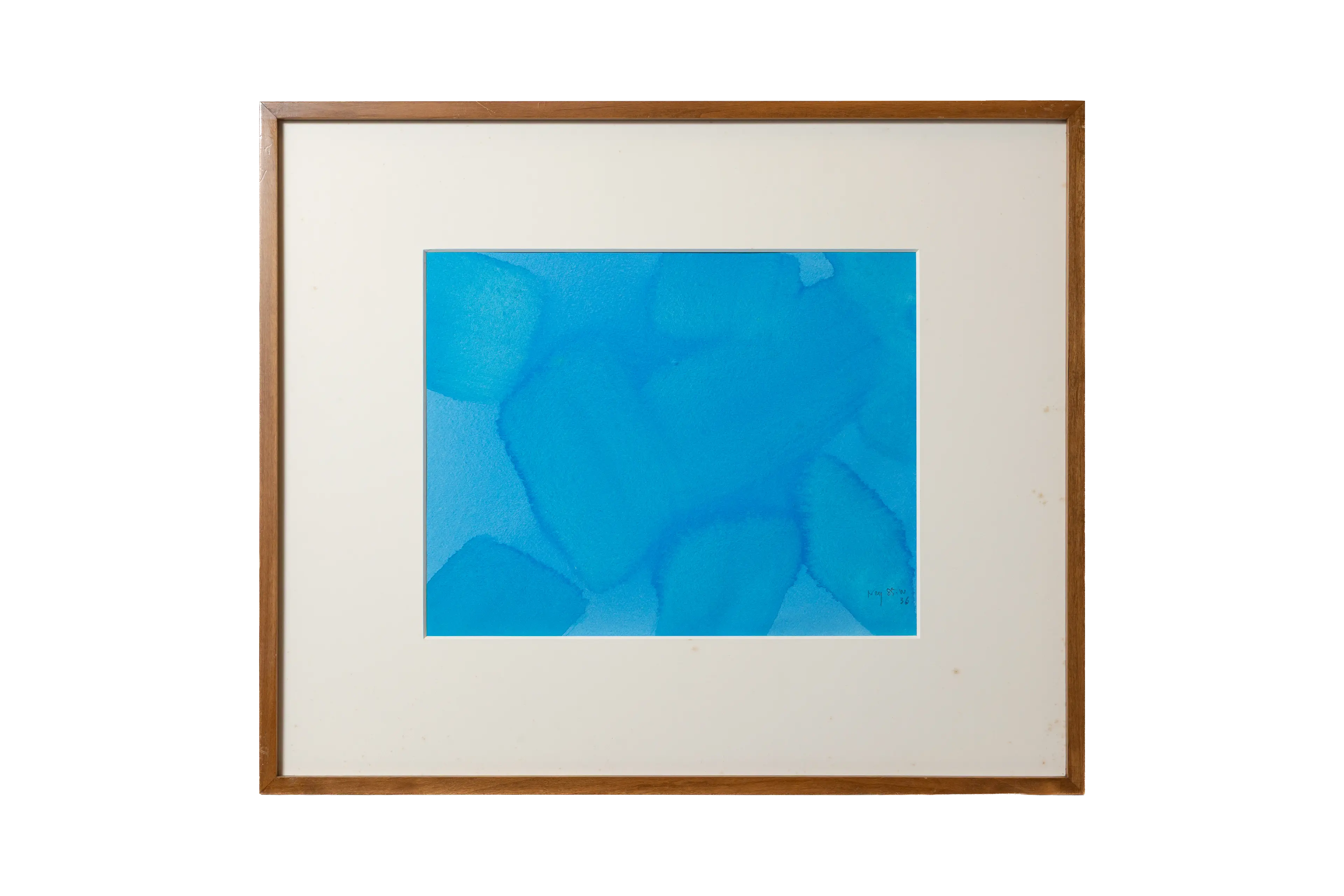
坂本寧(1930〜2023)は、熊本県菊池郡大津町出身の画家、医師です。「さかもとやすし」だけではなく「さかもとねい」という作家名も併用しています。1945年から坂本善三に師事し、熊本大学医学部、同大学院医学研究科で学びながら制作を続けました。医師として地域医療に携わる一方、抽象画、風景画、版画、ペン画など幅広い表現に取り組みました。
坂本の作品には、師である坂本善三に通じる静かな構成感と、身近な自然や生命へのまなざしが見られます。つなぎ美術館のコレクション展では、魚をモチーフにした版画とペン画が紹介されており、線や面の重なりを通して、具象的な対象を簡潔で詩的なかたちへと移していく姿勢がうかがえます。また、1982年には熊本市消防局に水をテーマにした壁画を制作し、2006年には熊本日日新聞夕刊で夏目漱石『草枕』の挿絵を連載しました。
資生堂ギャラリー、紀伊國屋画廊、熊本県立美術館、つなぎ美術館、宇城市不知火美術館などで発表を重ね、パリでも個展や企画出品を行いました。坂本善三の没後は坂本善三美術館の設立に関わり、1995年から2008年3月まで館長を務めました。画家、医師、美術館運営者という複数の立場を通じて、熊本の美術文化を支えた作家です。
Yasushi SAKAMOTO (1930–2023) was a painter and physician from Ozu, Kikuchi District, Kumamoto Prefecture. In addition to "Sakamoto Yasushi," he also used the artist name "Sakamoto Nei." From 1945, he studied under Zenzo SAKAMOTO while continuing to make art during his studies at Kumamoto University School of Medicine and its Graduate School of Medical Sciences. While working as a physician in regional medical care, he pursued a wide range of forms, including abstract painting, landscape painting, printmaking, and pen drawing.
SAKAMOTO’s work reflects a quiet sense of composition connected to his teacher Zenzo SAKAMOTO, as well as an attentive gaze toward familiar nature and life. A collection exhibition at Tsunagi Art Museum introduced his prints and pen drawings featuring fish as a motif. Through layered lines and planes, these works suggest an approach that transforms concrete subjects into concise, poetic forms. In 1982, he also created a water-themed mural for the Kumamoto City Fire Department, and in 2006 he serialized illustrations for Natsume Soseki’s "Kusamakura" in the evening edition of the Kumamoto Nichinichi Shimbun.
SAKAMOTO exhibited widely at venues including Shiseido Gallery, Kinokuniya Gallery, the Kumamoto Prefectural Museum of Art, Tsunagi Art Museum, and Uki City Shiranui Museum, and also held solo exhibitions and participated in curated presentations in Paris. After Zenzo SAKAMOTO’s death, he became involved in the establishment of the Sakamoto Zenzo Museum of Art and served as its director from 1995 to March 2008. Through his multiple roles as an artist, physician, and museum director, he helped support the art and culture of Kumamoto.