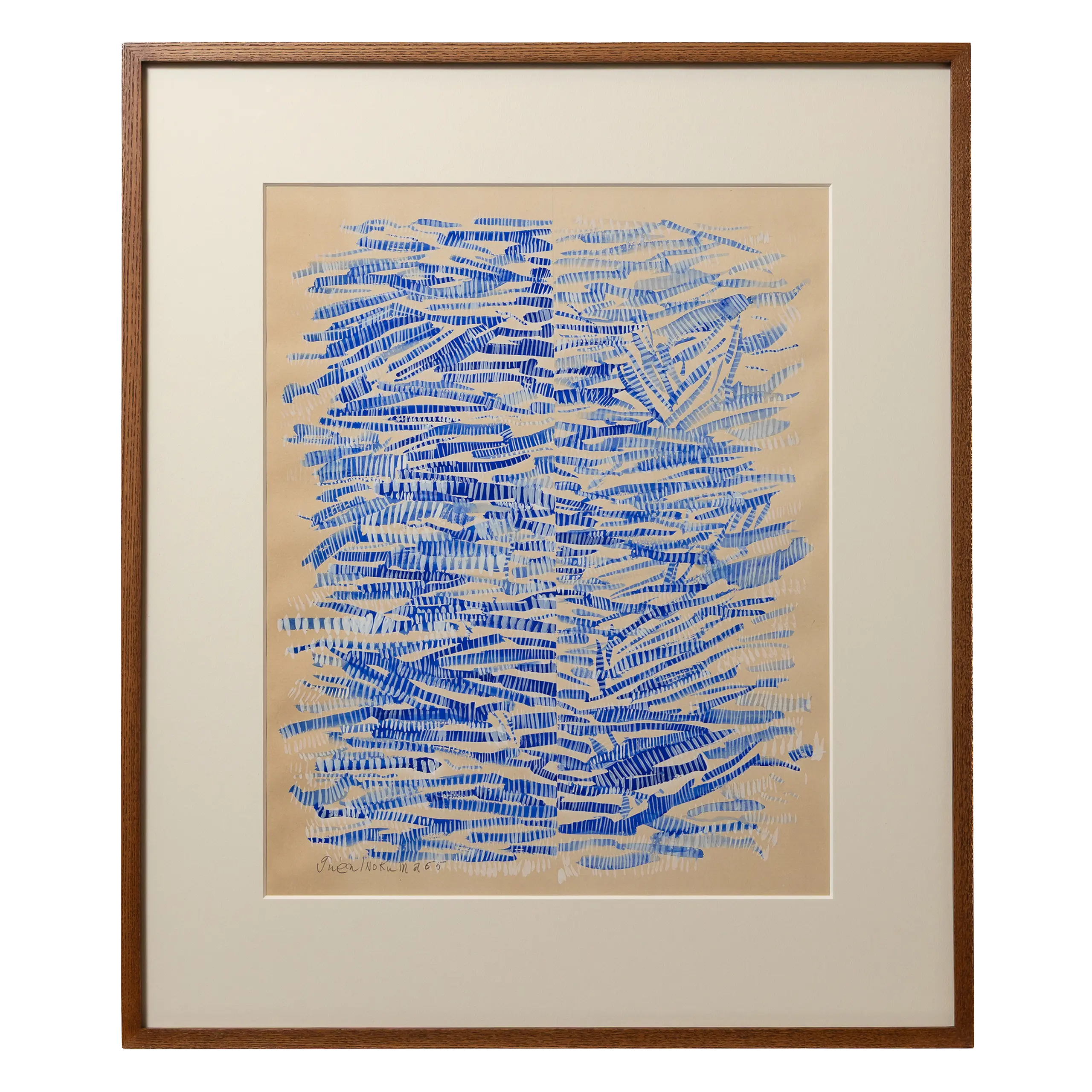
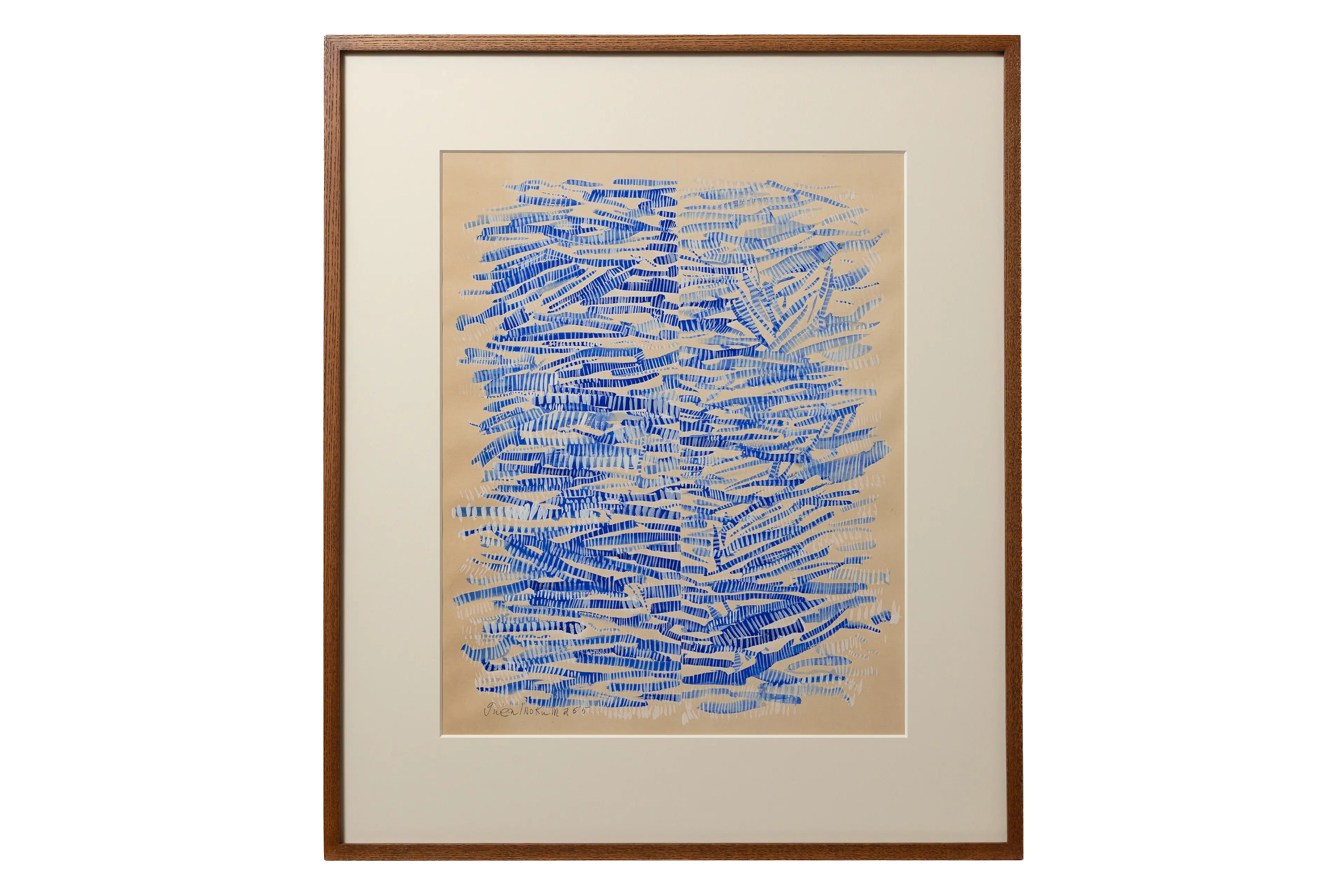
猪熊弦一郎(1902〜1993)は、香川県高松市出身の洋画家です。1922年に東京美術学校(現・東京藝術大学)の洋画科に進学し、藤島武二に師事しました。同期には小磯良平、荻須高徳、山口長男らがおり、1927年には上杜会を結成しています。帝展では1926年に初入選し、のちに『座像』(1929年)、『画室』(1933年)が特選となるなど、1930年代に官展で活躍しました。1936年には小磯良平、伊勢正義、脇田和らと新制作派協会(現・新制作協会)を結成し、以後の発表の場としました。
1938年からフランスに遊学し、アンリ・マティスの助言を受けました。帰国後は終戦を経て田園調布純粋美術研究室を開設し、後進の指導にもあたりました。1948年から『小説新潮』の表紙絵を担当し、1950年には三越の包装紙『華ひらく』をデザインしました。慶應義塾大学学生ホールの壁画『デモクラシー』や名古屋丸栄ホテルホールの壁画『愛の誕生』では第2回毎日美術賞を受賞し、1951年には国鉄上野駅(現・JR東日本上野駅)の大壁画『自由』を制作するなど、油彩のほか公共空間やデザインの分野でも手がけています。イサム・ノグチとの交流も長く続きました。
1955年、パリへの渡航を目指して日本を発ちましたが、ニューヨークに留まり、約20年間ウィラード・ギャラリーでの個展などを重ねました。1964年の第6回現代日本美術展では『Entrance(A)』が国立近代美術館賞を受賞しています。1975年以降は冬をハワイ、それ以外の季節を東京で過ごし、作風は幾何学を基調とする抽象へと移っていきます。1980年に勲三等瑞宝章を受章しました。1989年に丸亀市へ作品1000点を寄贈し、1991年に丸亀市猪熊弦一郎現代美術館が開館しました。1993年5月17日、東京で亡くなりました。90歳でした。
Genichiro INOKUMA (1902–1993) was a Western-style painter born in Takamatsu, Kagawa Prefecture. In 1922 he entered the Western Painting department of the Tokyo School of Fine Arts (now Tokyo University of the Arts) and studied under Takeji FUJISHIMA. His classmates included Ryohei KOBAYASHI, Takanori OGISU, and Takeo YAMAGUCHI, and in 1927 they formed the Jodokai group. At the Teiten (Imperial Art Exhibition) he was first selected in 1926, and works such as "Seated Portrait" (1929) and "The Studio" (1933) later received the Special Selection, establishing him as a leading exhibitor at official salons through the 1930s. In 1936 he founded the Shinseisaku-ha Association (now the Shinseisaku Association) with Ryohei KOBAYASHI, Masayoshi ISE, Kazu WAKITA, and others, and used it as his primary venue for showing work thereafter.
From 1938 he studied in France and received guidance from Henri Matisse. After returning to Japan and the end of the war, he opened the Jiyuga Art Institute in Den'en-chofu and taught younger artists. From 1948 he produced cover illustrations for the magazine Shosetsu Shincho, and in 1950 he designed Mitsukoshi's wrapping paper "Hana hiraku." Murals "Democracy" at Keio University Student Hall and "The Birth of Love" at the Nagoya Maruei Hotel Hall earned him the 2nd Mainichi Art Award, and in 1951 he completed the large mural "Freedom" at Ueno Station (now JR East Ueno Station). Beyond oil painting, he also worked in public spaces and design. His exchange with Isamu Noguchi continued over many years.
In 1955 he left Japan intending to travel to Paris but remained in New York, where for roughly twenty years he presented solo exhibitions at the Willard Gallery, among other venues. At the 6th Contemporary Art Exhibition of Japan in 1964, "Entrance (A)" received the National Museum of Modern Art Prize. From 1975 onward he spent winters in Hawaii and the rest of the year in Tokyo, and his style shifted toward abstraction grounded in geometry. In 1980 he received the Third Class Order of the Sacred Treasure. In 1989 he donated 1,000 works to Marugame City, and the Marugame Genichiro-Inokuma Museum of Contemporary Art opened in 1991. He died in Tokyo on May 17, 1993, at the age of 90.