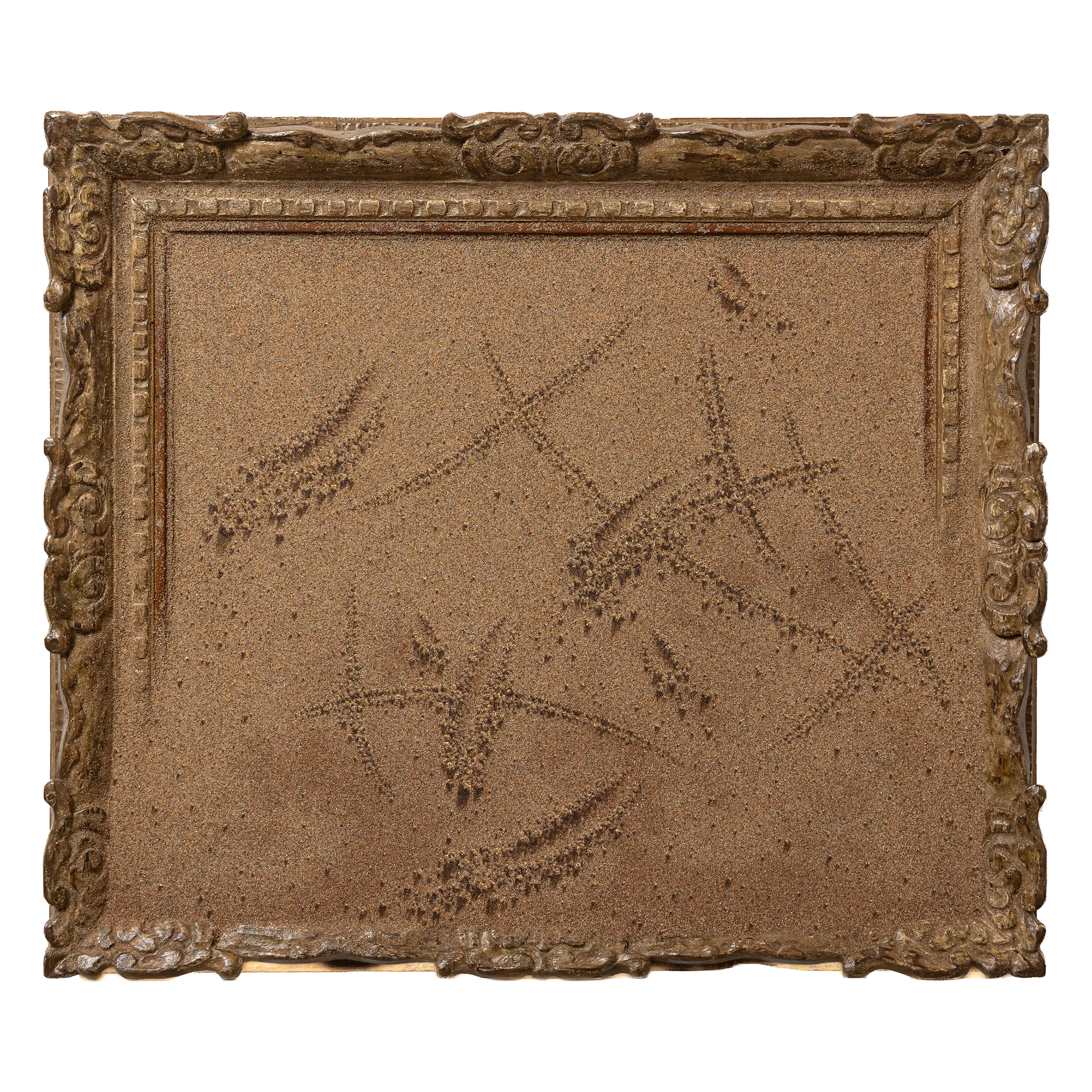
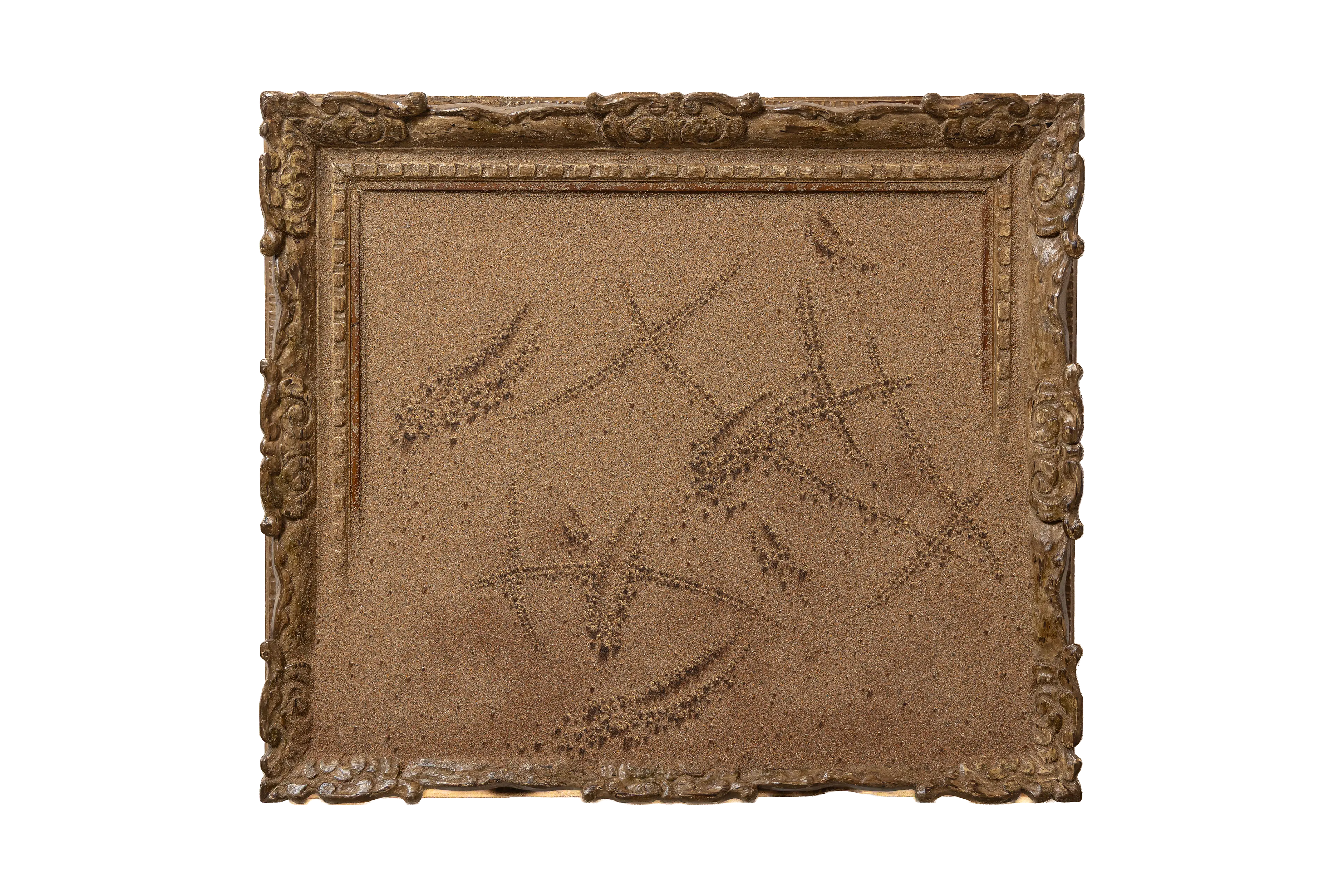
金昌永(1957〜)は、砂や黄土をキャンバスに貼り付け、その上に油彩で描く「砂絵画」を手がける作家です。
砂や黄土を用いて地層のような質感を画面に作り出し、そこに油彩で足跡や靴痕、引っかき傷のような痕跡を描き込みます。実物の素材と描かれたイリュージョン(視覚的効果)とを重ね合わせることで、現実と虚構のあいだを探る表現を続けています。鑑賞者は、実体の砂による現実と、油彩による錯覚が作り出した虚構とのあいだで揺れ動く感覚を楽しむことができます。キャンバスや藁袋など支持体を変えながらも、触覚的な砂面と描かれた痕跡の対比が作品の一貫した特徴です。
金は1957年に韓国の大邱で生まれ、1982年に来日しました。創形美術学校と東京芸術専門学校で学び、1990年代には東京芸術専門学校で非常勤講師も務めました。代表作には、砂を主素材とする『SAND PLAY』シリーズ、都営地下鉄大江戸線の牛込神楽坂駅構内に展示される「SAND PLAY 005」などが挙げられます。韓国中央美術大展大賞、現代日本美術展美術文化振興協会賞、1999年のシャルジャ・ビエンナーレ大賞などの受賞歴があり、韓国国立現代美術館、広島市現代美術館、埼玉県立近代美術館ほかに作品が所蔵されています。2000年代以降は国内外の個展に加え各地のギャラリーでの発表も重ねています。
Chang-Young KIM (1957–) is an artist who makes what he calls "sand paintings": works built by adhering sand or loess to canvas and painting over them in oils.
Using sand or loess, he creates a stratified, earth-like texture on the surface and then paints in oil traces such as footprints, shoe marks, and scratch-like marks. By layering actual materials with painted illusion (visual effect), he continues an approach that explores the space between reality and fiction. Viewers can take in the shifting sensation of moving between the reality of physical sand and the fiction created by the optical effects of oil paint. Whether the support is canvas, a straw sack, or another surface, a consistent feature of his work is the contrast between the tactile sand plane and the painted traces.
Kim was born in Daegu, Korea, in 1957 and moved to Japan in 1982. He studied at the Sokei Academy of Fine Arts and the Junior College of Art and Design at Tokyo University of the Arts, and in the 1990s he also served as a part-time lecturer at the latter school. His representative works include the "SAND PLAY" series, which uses sand as its primary material, and "SAND PLAY 005," displayed inside Ushigome-Kagurazaka Station on the Toei Oedo Line. He has received awards including the Grand Prize at the Korea National Art Exhibition, the Association for the Promotion of Art and Culture Award at the Contemporary Japanese Art Exhibition, and the Grand Prize at the 1999 Sharjah Biennial. His work is held in collections including the National Museum of Modern and Contemporary Art, Korea, the Hiroshima City Museum of Contemporary Art, and the Museum of Modern Art, Saitama, among others. Since the 2000s, he has continued to present solo exhibitions in Japan and abroad and to show his work at galleries in various locations.