上前智祐(1920~2018)は、関西の前衛美術グループ「具体美術協会(以下、具体)」に結成から解散までのあいだ在籍していた美術家です。
京都府中郡奥大野村(現・京丹後市)に生まれた上前は、小学校を出てから10代の終わり頃まで、洗い張り屋(着物の糸をほどき、一枚布にして洗濯をする店)で働いていました。このとき習得した技術が後の「縫い」シリーズにつながっているのですが、芸術の道を志した当初は挿絵画家に憧れてイラストや南画を独学し、1947年には二紀会第1回展に出品したことを契機に洋画家の黒田重太郎(1887~1970)に師事しました。しかし、1952年に神戸三越百貨店の展覧会にて、具体のリーダーである吉原治良(1905~1972)のクレパス画に感銘を受けたことで、本格的に抽象画を手がけるようになります。
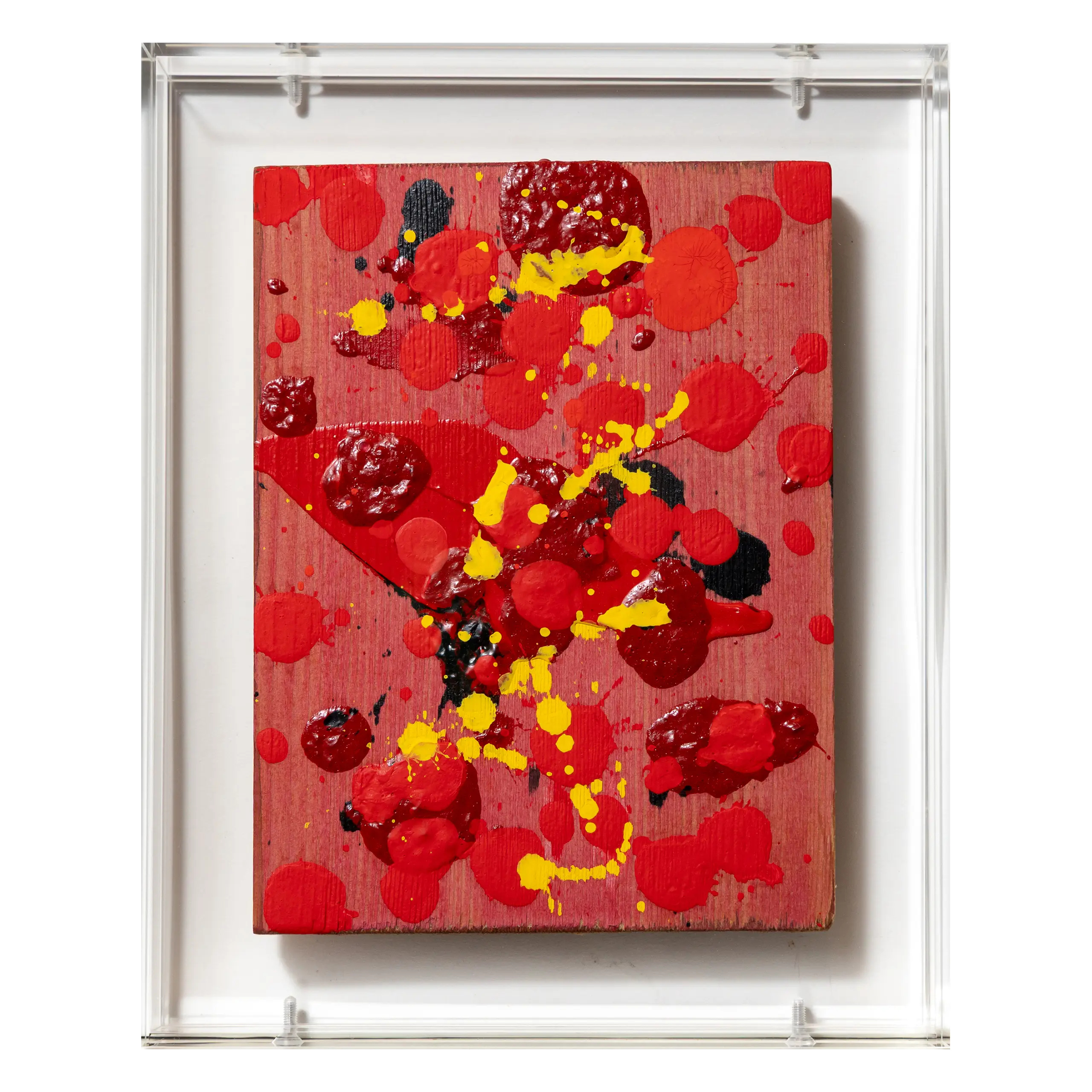
1954年、具体に加入した上前は、クレーン運転手として鋳造工場に勤めるかたわら、創作活動に励みました。この頃の、赤や黄色や緑といった絵の具をびっしりと塗りこんだ油彩画は、一見アンフォルメル風の激しさを備えながらも、その裏側には印象派の点描を思わせる地道で綿密な工程があり、この時点で具体の主流からは外れた独自性を発揮していたと考えられます。1960年代には、絵の具のキャップやおがくず、マッチ棒などをペンキと混ぜ合わせて画面を覆いつくした、平面と立体のあいだを行き来するような作品を生み出しています。具体での活動を通して自分なりの作風を突きつめていく一方で、彼の日記がまとめられた『上前日記1947-2010 上前智祐と具体』(2019年)には、「現在のところでは全く具体の中では僕の存在は見捨てられた様なものだ。」(1956年1月22日)、「(前略)僕が何をやっても具体の人々には劣っていて、追いついて行くことが出来ないと、先生が独断的に決めつけられているのではないだろうかと思う程になる。」(1960年4月)などの文言が散見していることから、必ずしも彼にとってまばゆいばかりの時代ではなかったことを窺い知ることができます。
代表作である「縫い」の作品を手がけ始めたのは、具体が解散した後の1975年頃からのことです。枠に張ったキャンバスの絵画作品は重量があり搬入の際の運賃もかかるため、もっと軽い作品をつくれないかと考えたのが制作のきっかけでした。刺繍用の太い糸を二重にし、太さ6、7センチのフトン針で布に縫いこんでいく手法は、紛れもなく上前が一貫して追究してきた造形の到達点であり、折しもファイバーアートが日本で紹介され始めた時期において彼が注目を集めるのはごく自然な流れでした。
とはいえ、上前が具体のメンバーとしてはあまり目立たず、他の主要メンバーの影に長年隠れていたことは事実です。そんな彼の再評価が近年目覚ましいのは、派手なアクションや激情的な作風が代名詞の具体を出発点としながら、緻密な手作業を究め続けたその異質さと、一連の作品が持つ静かな力強さゆえでしょう。今後は、具体における上前の位置づけや、より詳細な作風の変遷について更なる研究が進んでいくことが期待されます。
Chiyu UEMAE (1920–2018) was a member of the Gutai Art Association, the Kansai-based avant-garde group, from its founding in 1954 until its dissolution in 1972.
Uemae was born in Okuōno Village, Nakagun, Kyoto Prefecture (present-day Kyotango City). From the time he left primary school until his late teens, he worked at an araihari-ya, a shop that unpicked kimono threads, washed the fabric as a single cloth, and re-sewed it. The skill he learned there later shaped his signature "Sewing" series.
At first he hoped to become an illustrator and taught himself illustration and Nanga (Southern School painting). After his work was accepted at the 1st Niki-kai Exhibition in 1947, he studied Western painting with Shigetaro KURODA (1887–1970).
A turning point came in 1952, when he saw a crayon drawing by Jiro YOSHIHARA (1905–1972), the leader of Gutai, at an exhibition at the Kobe Mitsukoshi department store. The encounter led him to pursue abstract painting in earnest.
Uemae joined Gutai in 1954 and balanced his studio practice with work as a crane operator at a foundry. His oil paintings from this period are thickly layered with red, yellow, green, and other pigments. They can read at a glance as intense, Art Informel–like surfaces, yet they rest on a slow, meticulous process that recalls Impressionist pointillism. Even then, his work stood apart from much of the Gutai mainstream.
In the 1960s, he made works that moved between painting and relief, covering canvases with paint mixed with bottle caps, sawdust, matchsticks, and other collected materials. While he pressed his own direction within Gutai, his collected diaries, Uemae Diary 1947–2010: Chiyu Uemae and Gutai (2019), record a more difficult experience. He wrote, "At present, my existence within Gutai feels as if it has been abandoned" (January 22, 1956), and "I'm beginning to think that sensei [Yoshihara] may be arbitrarily deciding that I'm inferior to the other Gutai members in whatever I do and cannot catch up" (April 1960).
He began his "Sewing" works around 1975, after Gutai had dissolved. The shift grew partly from practical need: framed canvas paintings were heavy and costly to ship. Using thick embroidery thread, doubled and stitched into fabric with a large quilting needle, he developed a method that carried forward the material focus of his earlier work. As fiber art gained visibility in Japan, this painstaking handwork drew renewed attention.
For many years, Uemae was less visible than leading figures such as Kazuo SHIRAGA and Shozo SHIMAMOTO, whose action-based work defined much of Gutai's public image. More recent attention has come from the contrast between that high-energy Gutai context and his own commitment to dense, patient handwork, and from the quiet force of his work across media. His exact place within Gutai and the full course of his stylistic development remain subjects of ongoing study.