正延正俊(1911〜1995)は、具体美術協会の創立メンバーであり、静かな画面のなかに生の実感を込めた絵画を生涯にわたって追求した作家です。
正延は1911年に高知県須崎市に生まれ、高知県師範学校専攻科を卒業後、高知、東京、神戸で小中学校の美術教員を務めながら制作を重ねました。1957年には西宮に移り、自宅とアトリエを構えています。1948年から1949年頃、神戸市民美術教室で吉原治良に出会い、指導を仰ぐようになります。構成的な風景画や静物画から、複雑なマチエールをもつ抽象画へと展開し、1954年の具体美術協会結成に参加しました。アクションやパフォーマンスが注目される同会にあって、正延はタブローによる絵画の内在的問題に向き合い続けました。ゲンビ(現代美術懇談会)にも参加しています。
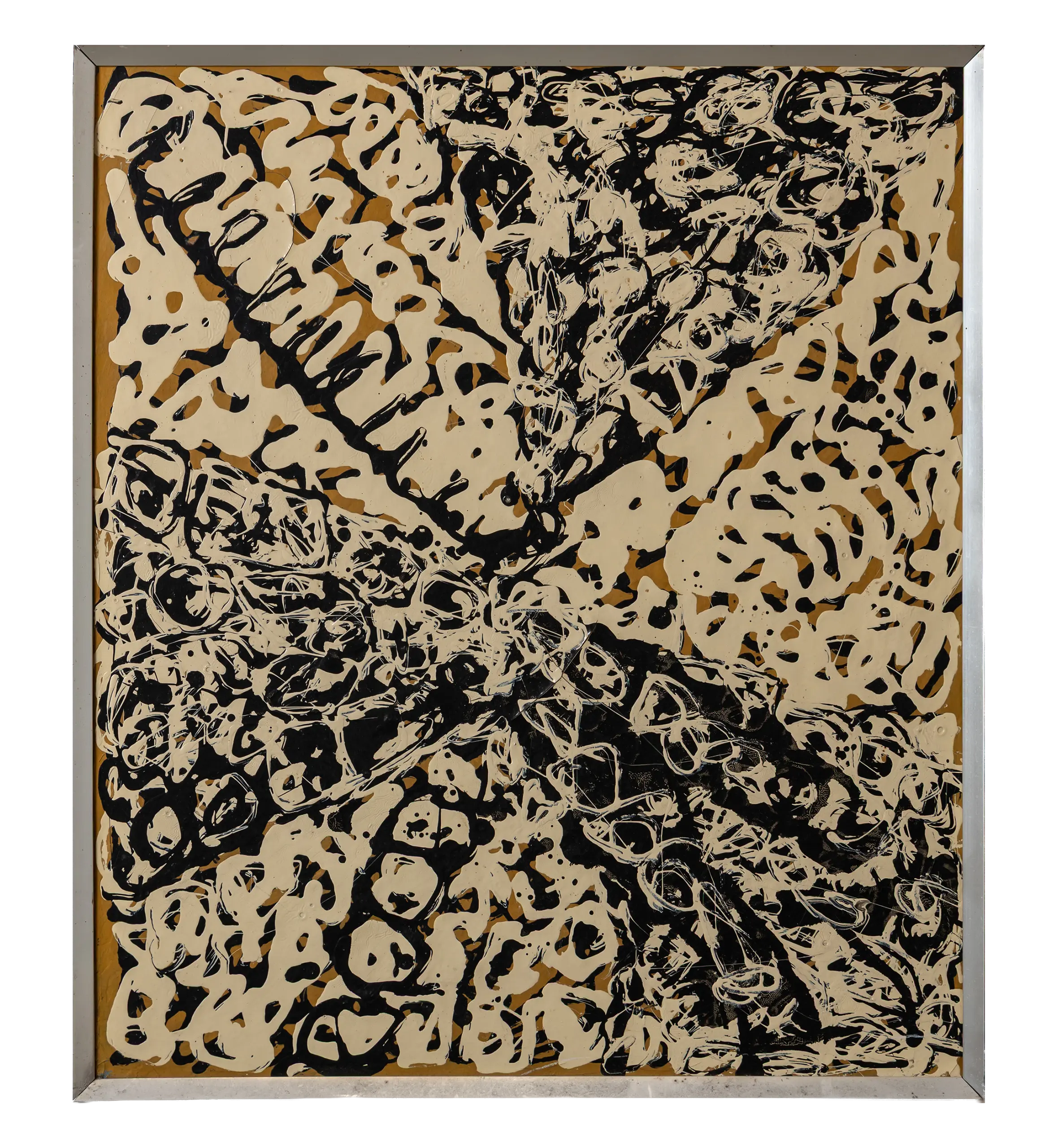
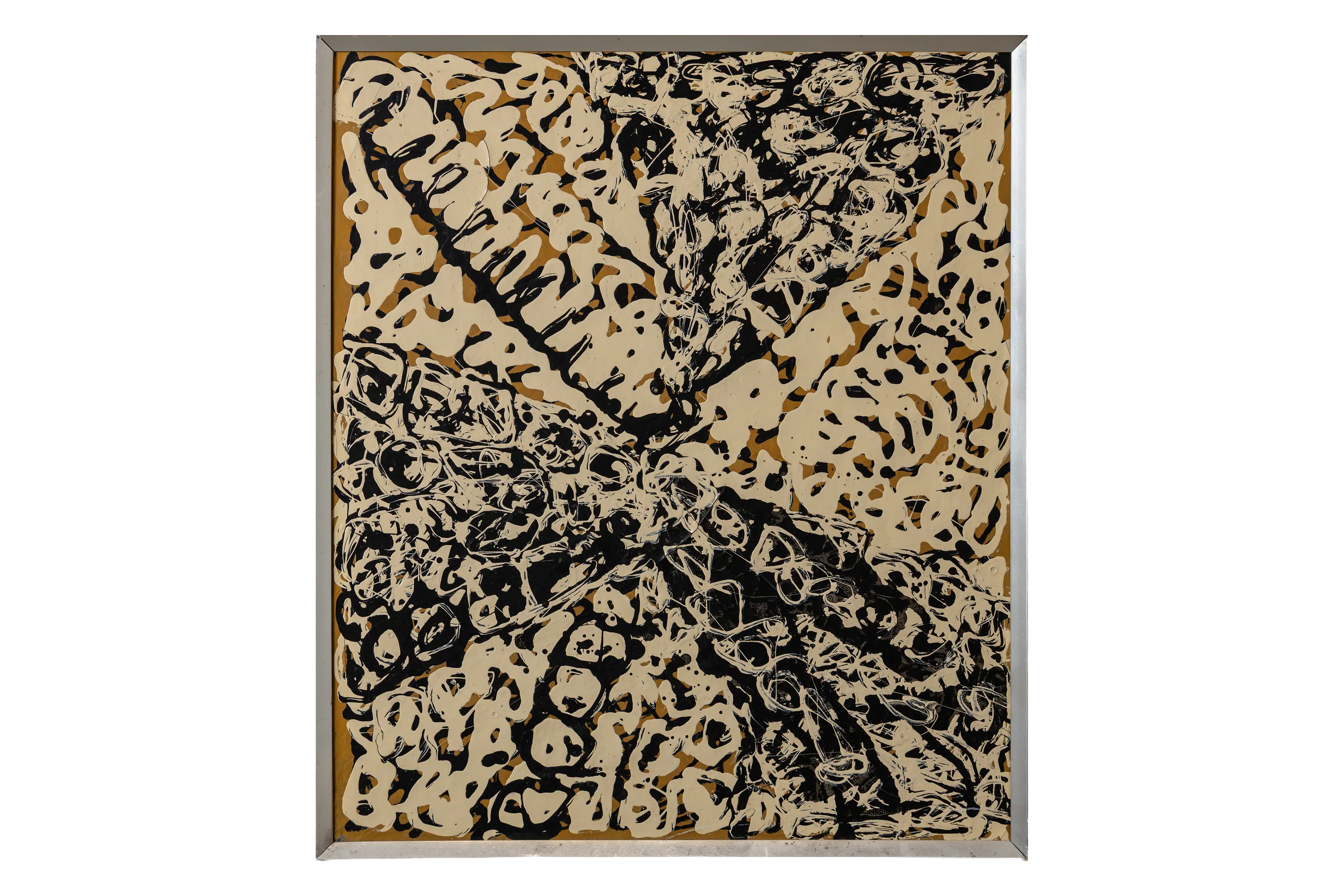
代表作として、具体参加以前の『円樹風景』(1949年)、1960年代の『作品』(1965年)、高知県立美術館蔵の『作品 65.2』(1965年)が挙げられます。油絵具やエナメル塗料を幾層にも塗り重ねた地肌の上に、微細な筆触や細い線、斑点を積み重ねる作風が特徴です。茶褐色や白、黒を基調とした落ち着いた色調のなかで、線の粗密と多方向への動きが、揺らぐような空間の密度をつくり出します。近づいて見ると、濃淡のある下地の上に白、黒、灰色、深緑、黄土色などの線が何層にも重なり、絵具の厚塗りや削り取り、綿布へのにじみ、エナメルの光沢といった物質感が画面を支えています。画面全体を覆う構成と、静けさのなかに感じられる線の運動性が、正延の絵画を特徴づけています。1960年代半ば以降は、画面が色面に分割される展開も見せています。
教員生活と並行しながら、具体展に継続して出品し、1972年の解散まで18年にわたって同会で活動しました。具体解散後は、阪神間で開催される個展や芦屋市展などを発表の場としました。
Masatoshi MASANOBU (1911–1995) was a founding member of the Gutai Art Association and an artist who pursued, throughout his life, paintings that invest a quiet surface with a vivid sense of living.
Masanobu was born in 1911 in Susaki, Kochi Prefecture. After graduating from the advanced course at Kochi Prefectural Normal School, he taught art at elementary and junior high schools in Kochi, Tokyo, and Kobe while continuing to paint. In 1957 he moved to Nishinomiya, where he established a home and studio. Around 1948–1949, he met Jiro YOSHIHARA at the Kobe Civic Art Classroom and began to study under his guidance. Moving from structured landscapes and still lifes toward abstraction with complex matière, he took part in the founding of the Gutai Art Association in 1954. Within a group known for action and performance, Masanobu continued to confront the internal problems of painting through the tableau. He also participated in Genbi (Gendai Bijutsu Kondankai, the Contemporary Art Discussion Group).
Representative works include “Circular Tree Landscape” (1949), from before his Gutai period; “Work” (1965), from the 1960s; and “Work 65.2” (1965), in the collection of the Kochi Prefectural Museum of Art. His manner is marked by fine brushstrokes, thin lines, and flecks built up on grounds layered in oil and enamel. Within a subdued palette centered on browns, white, and black, the density and multidirectional movement of line produce a fluctuating spatial density. Seen up close, lines in white, black, gray, deep green, and ochre accumulate in many layers over a tonally varied ground, and the material presence of thick paint, scraping, bleeding into the cotton support, and the sheen of enamel sustains the surface. An all-over composition and a sense of linear motion felt within stillness characterize Masanobu’s painting. From the mid-1960s onward, his work also develops toward surfaces divided into color fields.
While teaching, he exhibited continuously in Gutai exhibitions and remained active in the association for eighteen years, until its dissolution in 1972. After Gutai disbanded, he presented work through solo exhibitions in the Hanshin area and at the Ashiya City Exhibition, among other venues.