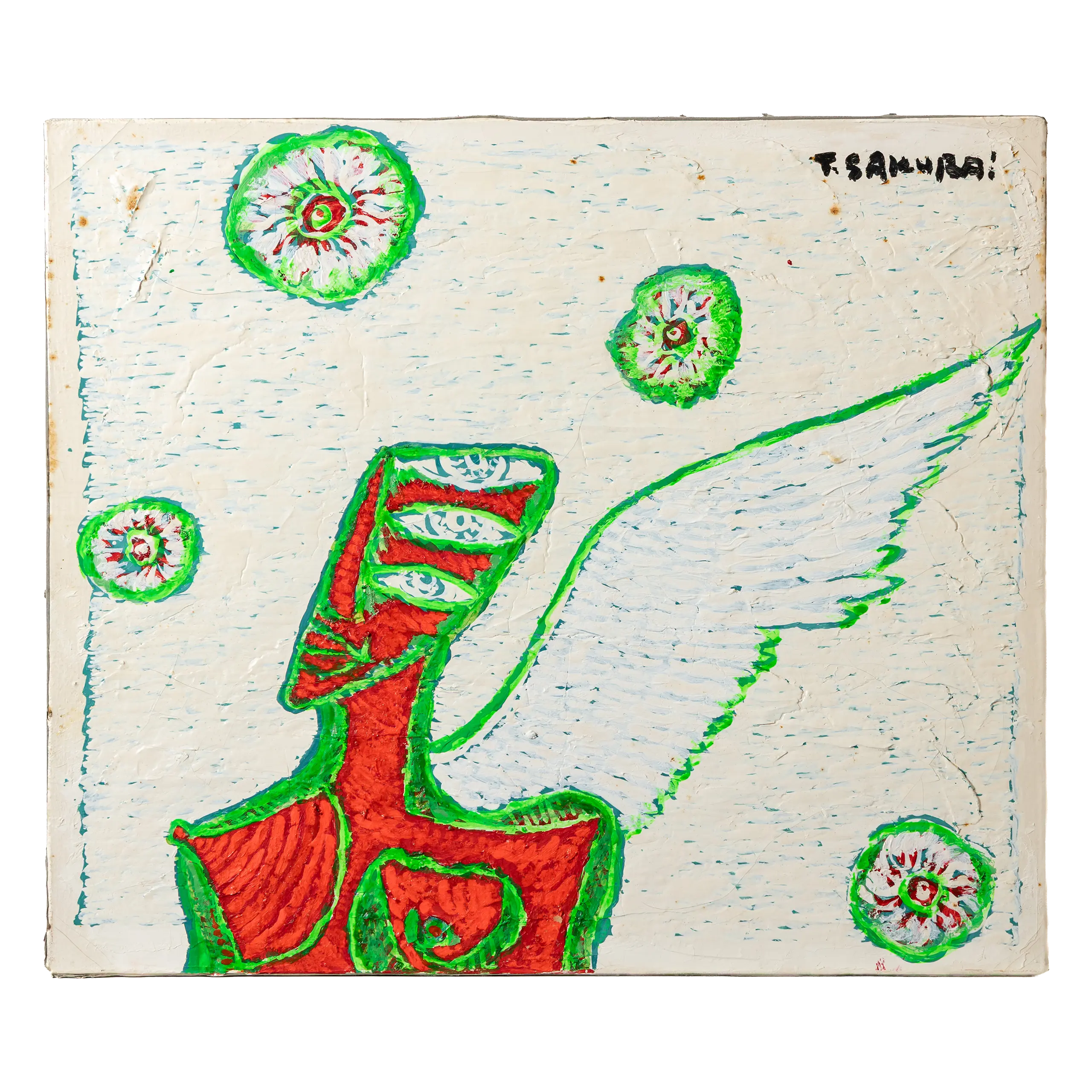
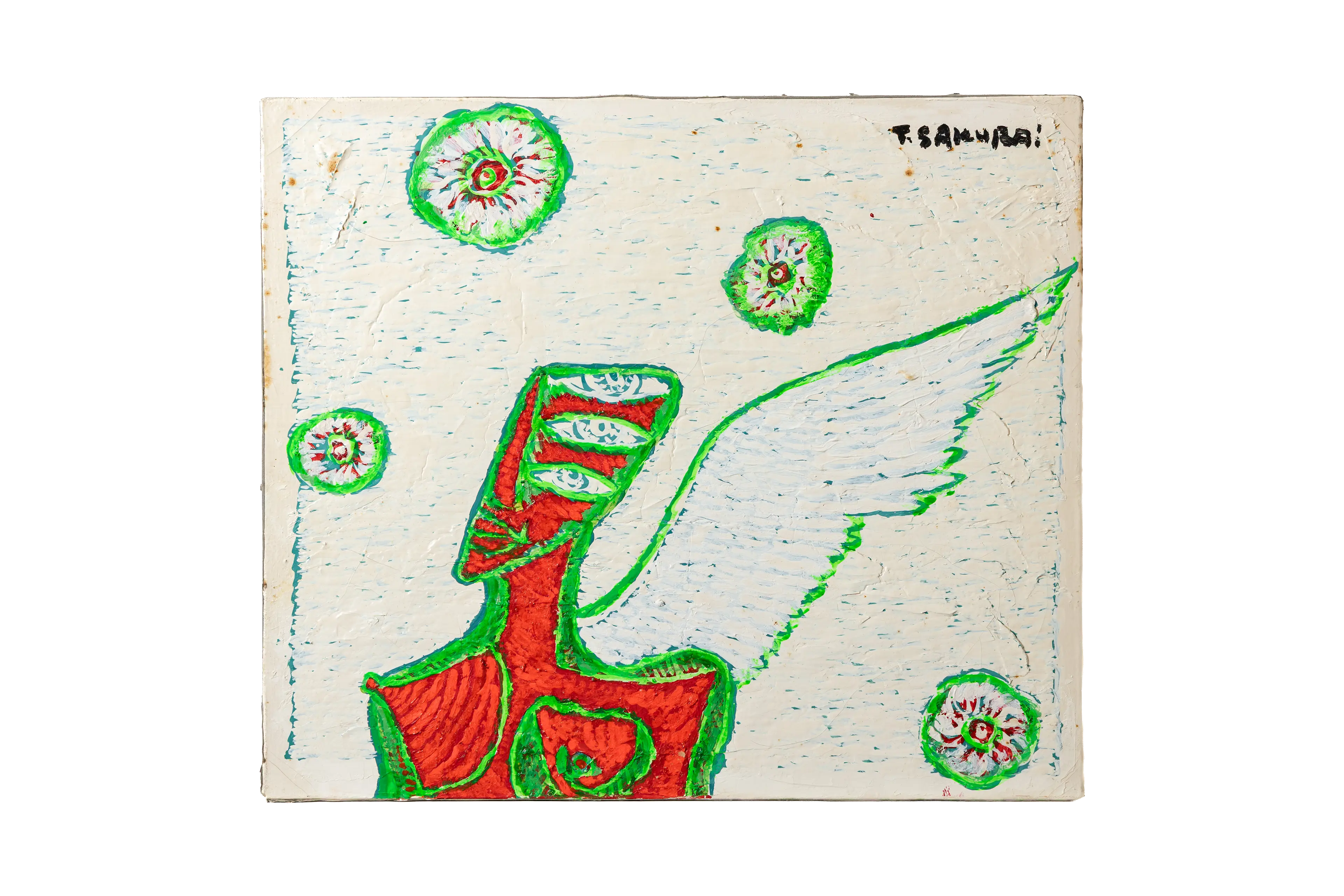
桜井孝身(1928〜2016)は、福岡を拠点に結成された前衛美術集団「九州派」の創立メンバーとして、戦後日本の現代美術に大きな足跡を残した画家です。
1928年に福岡県久留米市に生まれ、福岡学芸大学(現・福岡教育大学)を卒業後、西日本新聞社で校閲記者として働きながら制作を続けました。1955年、第40回二科展に『抵』を出品して初入選します。同展でオチオサムの作品に出会い、翌年の二科展激励会をきっかけに意気投合し、1957年頃、前衛美術集団「九州派」を結成しました。菊畑茂久馬、山内重太郎、寺田健一郎ら若手作家が加わり、福岡から東京へ、さらに海外へと活動の場を広げていきます。初期はアンフォルメル風の絵画から、コールタール、アスファルト、麻袋といった労働生活に根ざした素材を用いた反芸術的オブジェやパフォーマンスへと展開しました。
代表作として、二科展初入選作『抵』(1955年)、福岡市美術館蔵の『現代のシンメトリー』(1957年)、『リンチ』(1958年)、『パラダイスへの道』(1979年)が挙げられます。とくに『現代のシンメトリー』と『リンチ』は、ペンキやアスファルト、釘、針金などを組み合わせ、社会と身体の緊張を物質として画面に刻み込む作風を示しています。
読売アンデパンダン展への参加や街頭展示を通じて前衛の手法を実践し、1965年にはアメリカへ渡り、1970年にはサンフランシスコで「蒟蒻公社」を結成するなど、国際的な活動も展開しました。生活者の視点と表現のエネルギーを結びつけた作家として、福岡、東京、パリを往復しながら制作を続けました。
Takami SAKURAI (1928–2016) was a founding member of the avant-garde art group Kyushu-ha, formed in Fukuoka, and a painter who left a major mark on postwar Japanese contemporary art.
Born in 1928 in Kurume, Fukuoka Prefecture, he graduated from Fukuoka Gakuen University (now Fukuoka University of Education) and continued to make work while employed as a proofreader at the Nishinippon Shimbun. In 1955 he made his first acceptance at the 40th Nika Exhibition with “Tei.” At that exhibition he encountered the work of Osamu OCHI; they found common ground at the following year’s Nika encouragement meeting, and around 1957 they formed the avant-garde group Kyushu-ha. Younger artists including Mokuma KIKUHATA, Jutaro YAMAUCHI, and Kenichiro TERADA joined, and their field of activity expanded from Fukuoka to Tokyo and abroad. His practice moved from Informel-style painting toward anti-art objects and performance using materials rooted in working life, such as coal tar, asphalt, and burlap sacks.
Representative works include his first Nika acceptance, “Tei” (1955); “Modern Symmetry” (1957), in the collection of the Fukuoka Art Museum; “Lynching” (1958); and “Road to Paradise” (1979). In particular, “Modern Symmetry” and “Lynching” combine paint, asphalt, nails, and wire to inscribe social and bodily tension into the surface as material fact.
Through participation in the Yomiuri Indépendant Exhibition and street displays, he put avant-garde methods into practice. In 1965 he traveled to the United States, and in 1970 he formed the Konnyaku Commune in San Francisco, among other international activities. As an artist who linked the viewpoint of everyday life with the energy of expression, he continued to work while moving between Fukuoka, Tokyo, and Paris.