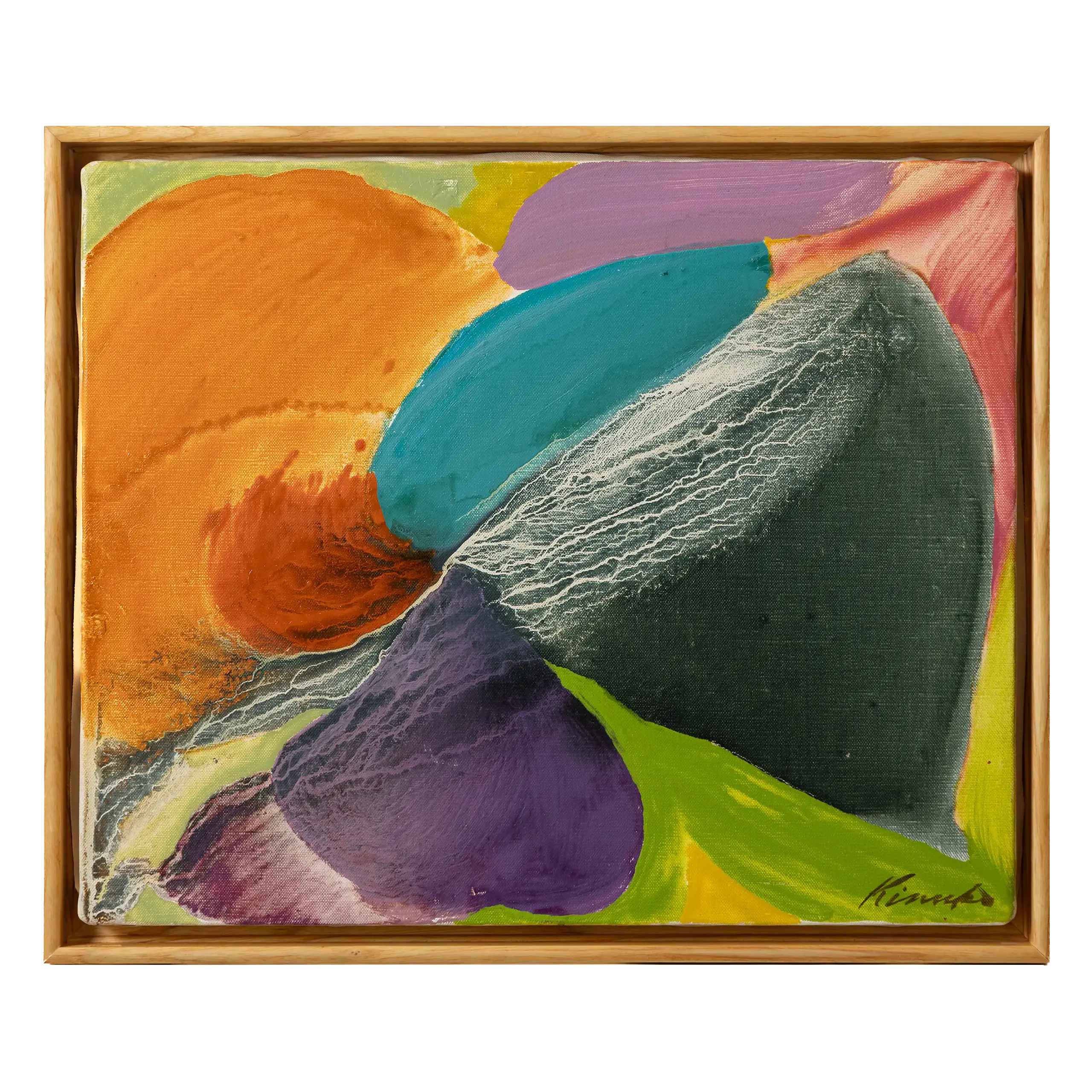
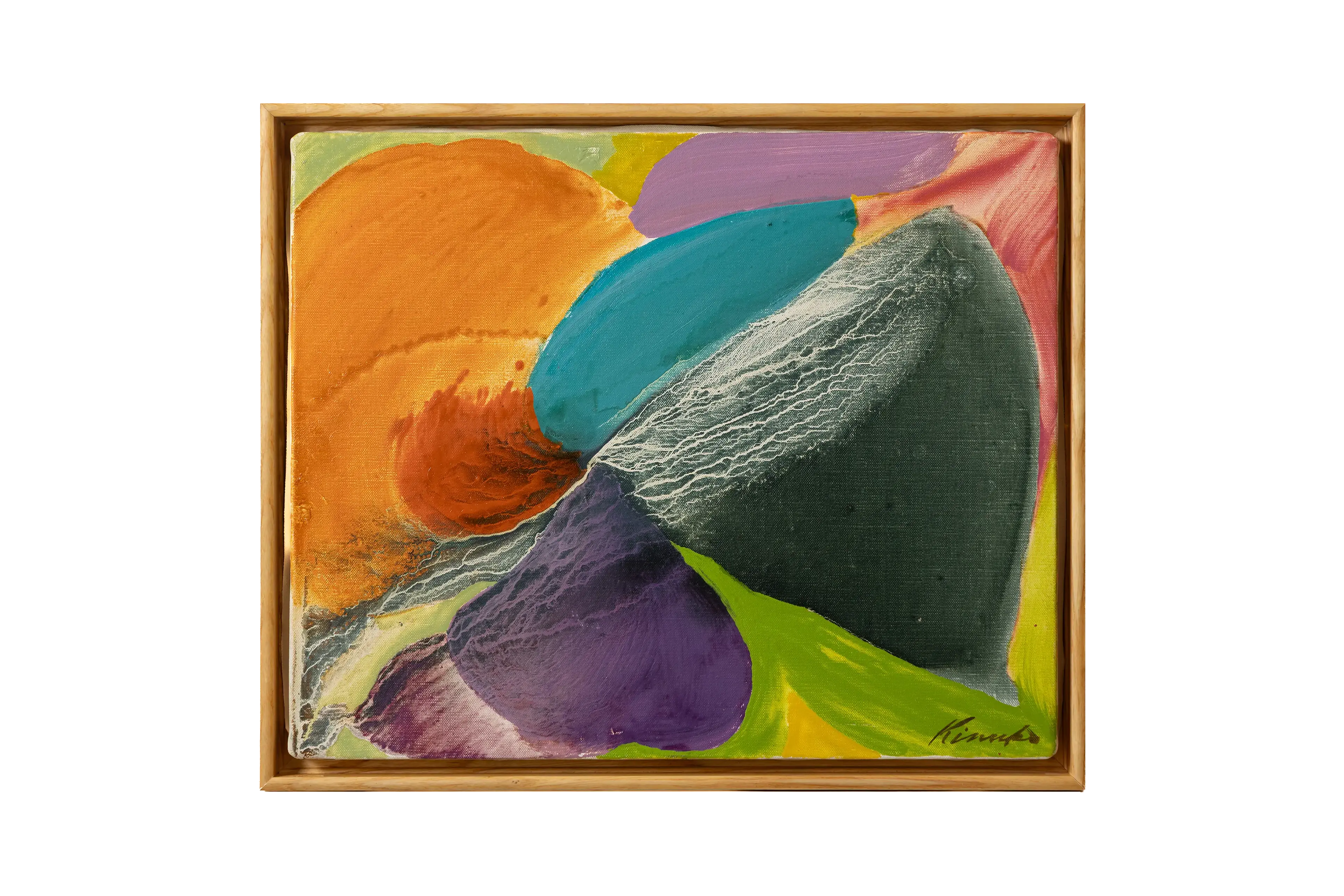
江見絹子(1923〜2015)は、日本の前衛美術の黎明期に活動した画家です。物質性とマチエールを重視し、半抽象から幾何学的抽象、さらに絵画の支持体や絵具そのものを問い直す表現へと、作家人生を通じて作風を大きく変えました。
1923年、兵庫県明石市に生まれた江見(本名:荻野絹子)は、1940年に兵庫県立加古川高等女学校を卒業したのち、1941年から1943年まで洋画家の伊川寛に師事しています。1945年から神戸市立洋画研究所で学び、1949年の第4回行動美術展に『鏡の前』で初入選しました。1950年には横浜市山手へ移り、1952年の第7回行動美術展で『むれ(2)』が行動美術賞を受賞。翌1953年には女性として初めて行動美術協会会員に推挙されました。同年から2年間、アメリカとフランスに滞在し、帰国後は抽象絵画を本格的に展開します。1956年には横浜の山手にアトリエを構え、以後ここを拠点に制作を続けました。1961年には竹中恵美子らとともに、神奈川県女流美術家協会の創立に携わりました。
1950年代末から60年代初頭にかけて、江見は旧作を解体して絵具を再構成するなど、絵画の物質性を前面に出す手法を用いました。1960年に発表された『Reaction No.2』は、その時期を代表する作品です。1962年、第31回ヴェネチア・ビエンナーレに日本人女性として初めて出品し、『作品3』『作品5』などを発表しました。これらの出品作はのちに神奈川県立近代美術館に寄贈され、作家の軌跡をたどるうえで重要な作品群となっています。
江見は2015年に91歳で死去しました。江見の作品は前述の神奈川県立近代美術館や横浜美術館などに所蔵されています。「東京画廊+BTAP」では2026年に個展が開催されました。同年、神奈川県立近代美術館ではコレクション展「没後10年 江見絹子」が開かれ、ヴェネチア出品作を中心に代表作が公開されました。
Kinuko EMI (1923–2015) was a painter active during the early years of Japanese avant-garde art. Emphasizing materiality and matière, she shifted her approach substantially over the course of her career, moving from semi-abstract and geometric abstract work to expressions that questioned the support and paint itself.
Born in Akashi, Hyogo Prefecture, in 1923, EMI (whose birth name was Kinuko OGINO) graduated from Hyogo Prefectural Kakogawa Girls' Higher School in 1940. From 1941 to 1943, she studied under the Western-style painter Kan IKAWA. From 1945, she studied at the Kobe Municipal Western Painting Institute, and at the 4th Action Art Exhibition in 1949, "Before the Mirror" was accepted for the first time. In 1950, she moved to Yamate in Yokohama. At the 7th Action Art Exhibition in 1952, "Mure (2)" received the Action Art Award, and in 1953 she became the first woman elected as a member of the Action Art Association. She spent two years in the United States and France beginning that year, and after returning to Japan, she pursued abstract painting in earnest. In 1956, she established a studio in Yamate, Yokohama, and continued to work from there. In 1961, she helped found the Kanagawa Prefectural Women Artists Association together with Emiko TAKENAKA and others.
From the late 1950s to the early 1960s, EMI used methods that brought the materiality of painting to the fore, including dismantling earlier works and reconfiguring their paint. "Reaction No.2", presented in 1960, represents this period. In 1962, she became the first Japanese woman to exhibit at the 31st Venice Biennale, presenting "Work 3", "Work 5", and other works. These exhibited works were later donated to the Kanagawa Prefectural Museum of Modern Art and form an important group of works for tracing her career.
EMI died in 2015 at the age of 91. Her works are held in the Kanagawa Prefectural Museum of Modern Art, the Yokohama Museum of Art, and other institutions mentioned above. Tokyo Gallery + BTAP presented a solo exhibition in 2026. In the same year, the Kanagawa Prefectural Museum of Modern Art presented the collection exhibition "Ten Years After the Death of Kinuko EMI", featuring her Venice exhibits and other representative works.