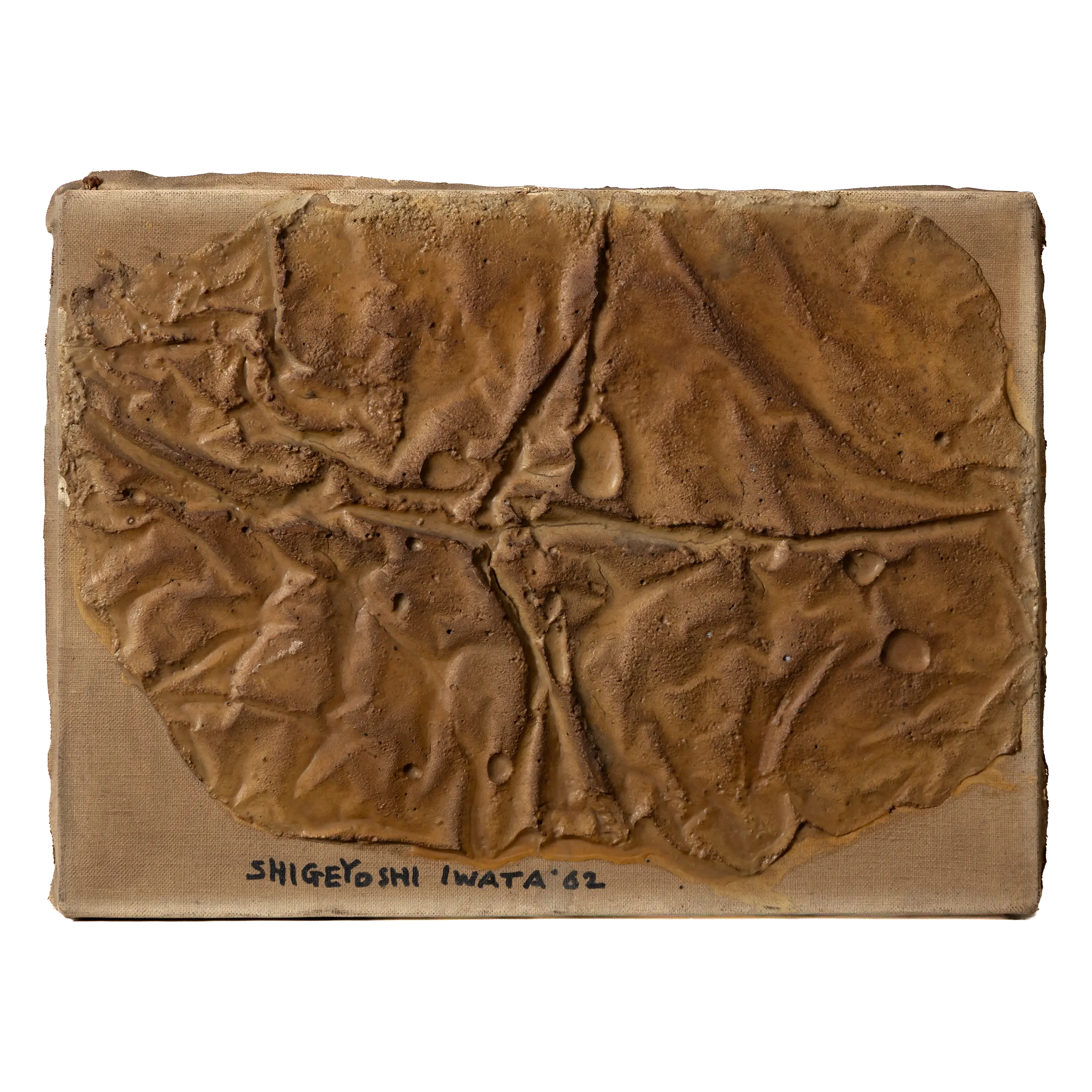
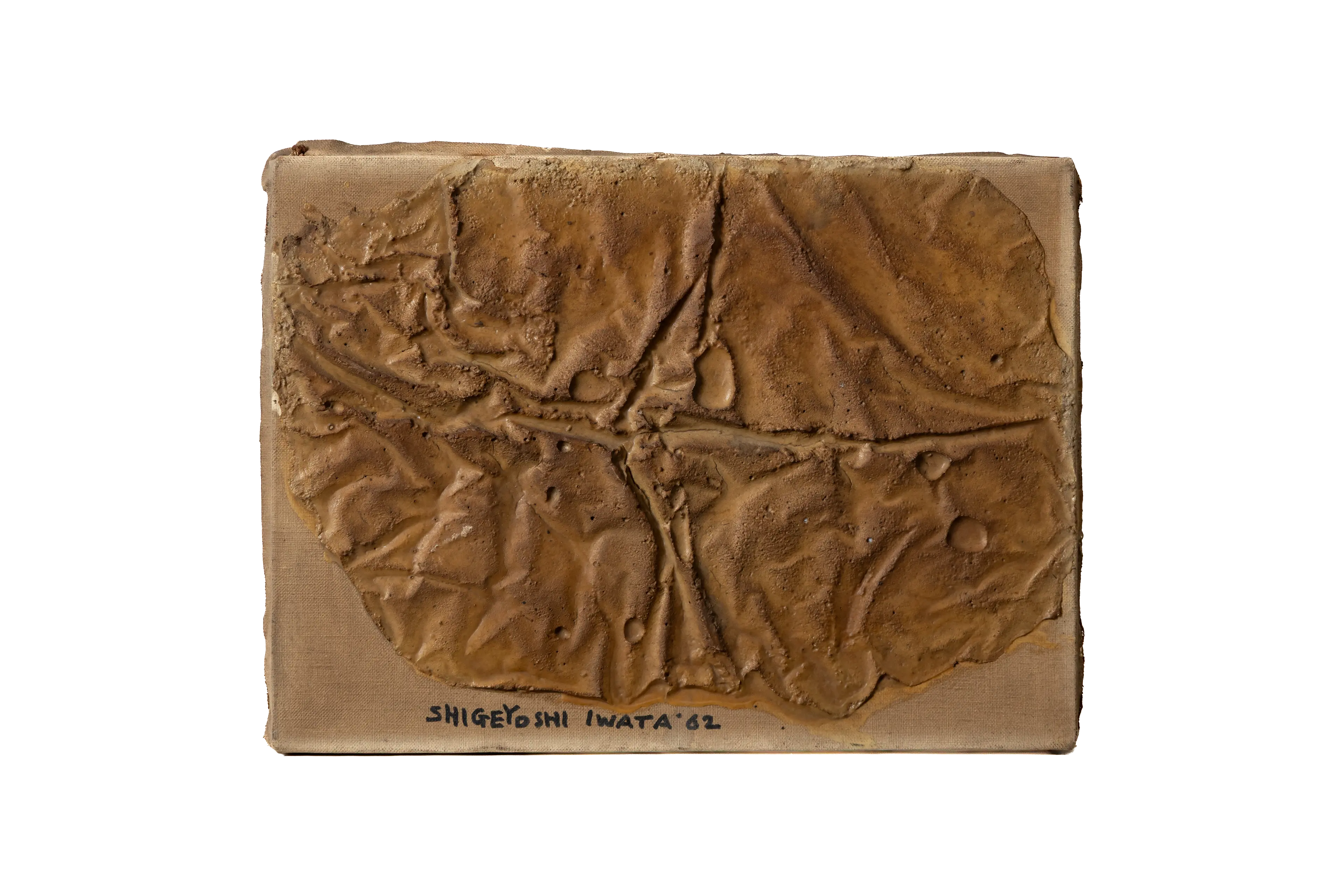
岩田重義(1935〜2025)は、戦後の京都で日本画の枠を問い直した前衛的な試みと、のちの軽やかな風景スケッチとで知られる作家です。素材への実験から、土地を歩く記録へと、表現の幅を大きく変えました。
1935年、滋賀県に生まれた岩田は、1958年に京都市立美術大学(現・京都市立芸術大学)日本画科を卒業します。1959年、同科出身の若手らとともに「ケラ美術協会」を結成し、創立メンバーとして活動しました。油絵具や布、木片など多様な素材を画材とし、岩田はこの前後に『ガードしたのドブ川』(1957年)、『断層』(1957年)、『黄いろな』(1960年)、京都国立近代美術館所蔵の『Work-139』(1963年)など、抽象的な作品を発表しています。活動のなかで北白川に制作の場を構え、1964年には日米文化協会の招待で渡米しました。
ケラ美術協会は、既成の芸術の概念にとらわれず、真に創造的で新しい芸術を目指すムーブメントとして、1964年まで続きました。協会解散後は読売テレビ美術部で長く勤務し、「11PM」などの番組の意匠にも携わります。一方、1981年からは『月刊京都』に「京を描く」としてスケッチと小文を連載し、『京を描く』『近江を描く』など画文集を刊行しました。後に大阪芸術大学舞台美術学科の非常勤講師も務めました。前衛の実験と、土地を歩く記録とが、岩田の活動の両輪にあります。
Shigeyoshi IWATA (1935–2025) is known for avant-garde efforts in postwar Kyoto that questioned the boundaries of nihonga (Japanese-style painting), and later for light landscape sketches. He shifted the range of his expression widely, from experiments with materials to records of walking the land.
Born in Shiga Prefecture in 1935, Iwata graduated in 1958 from the Department of Japanese Painting at Kyoto City University of Fine Arts (now Kyoto City University of Arts). In 1959, with other young artists from the same department, he founded the Kera Art Association and worked as a founding member. Using diverse materials such as oil paint, cloth, and wood fragments, he showed abstract works around this time, including “Guard-shita-no-dobugawa” (1957), “Dansou” (1957), “Kiirona” (1960), and “Work-139” (1963), held by the National Museum of Modern Art, Kyoto. During these years he set up a studio in Kitashirakawa, and in 1964 he traveled to the United States at the invitation of the Japan–U.S. Cultural Society.
The Kera Art Association continued until 1964 as a movement that sought truly creative, new art unbound by established ideas of art. After the association disbanded, Iwata worked for many years in the art department at Yomiuri Television and also contributed to the design of programs such as “11PM.” From 1981 he serialized sketches and short texts as “Kyo-wo-egaku” in Gekkan Kyoto (Monthly Kyoto), and published sketch collections including “Kyo-wo-egaku” and “Oumi-wo-egaku”. He later also served as a part-time lecturer in the Department of Stage Design at Osaka University of Arts. Avant-garde experiment and records of walking the land form the twin axes of Iwata’s practice.