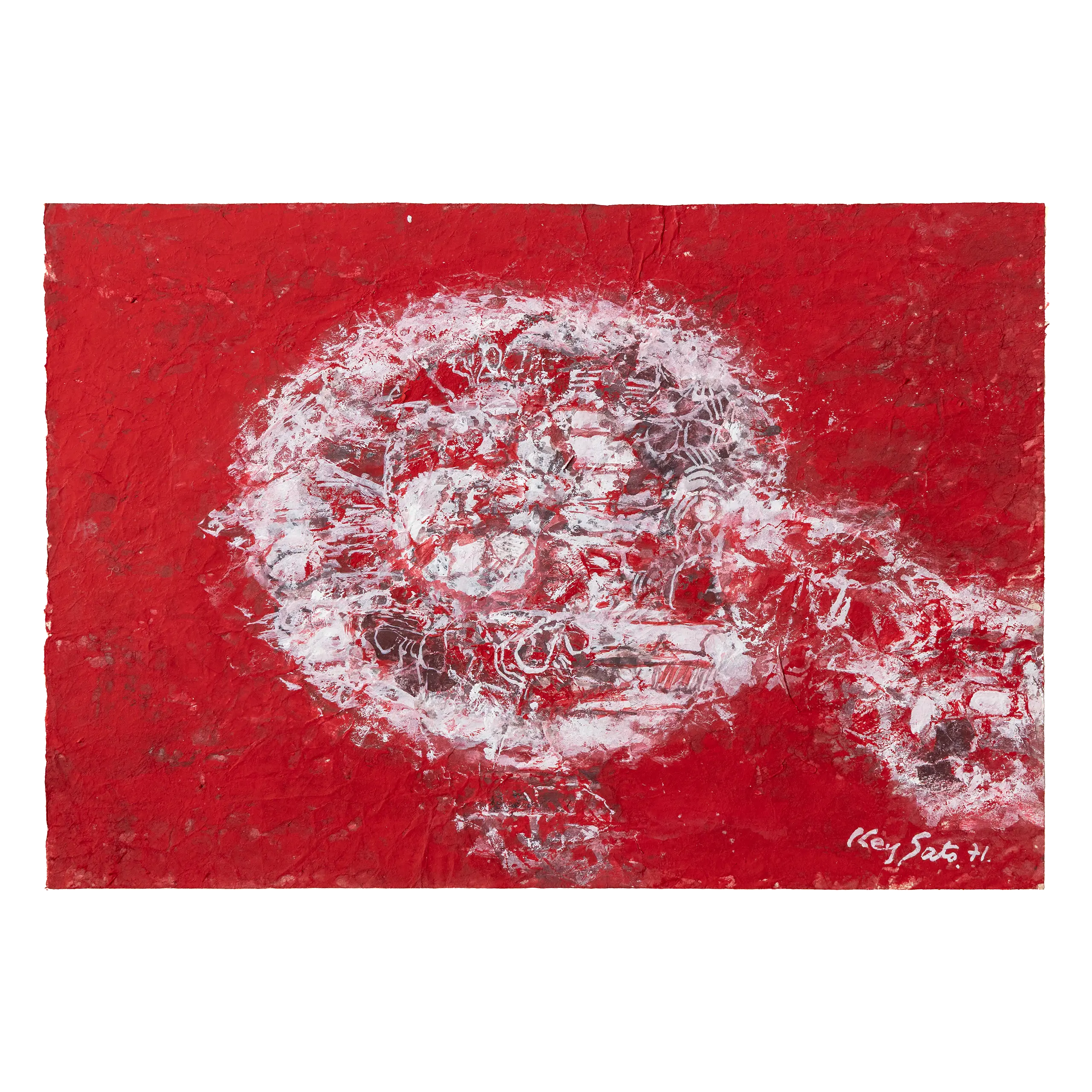
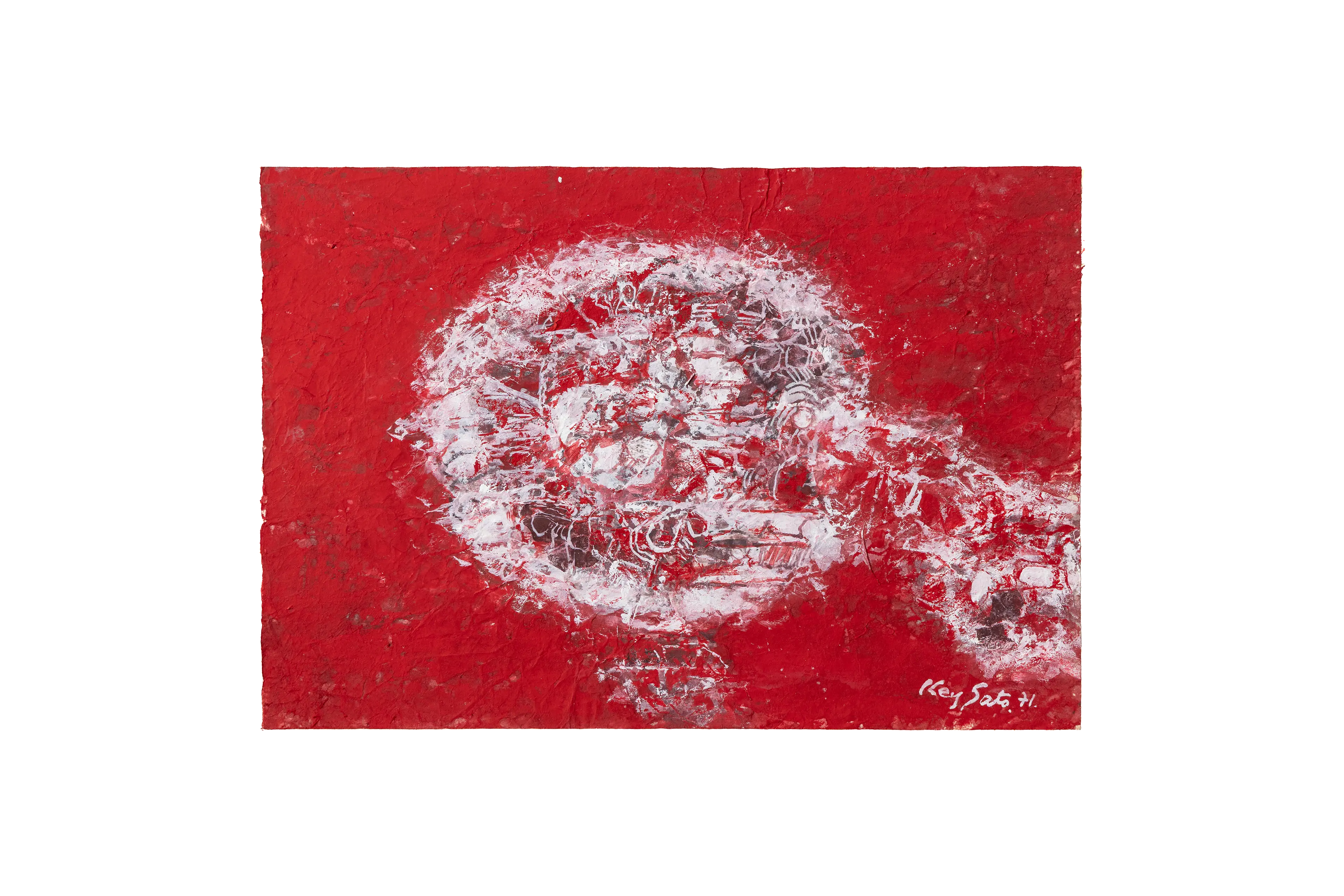
佐藤敬(1906〜1978)は、東京とパリを拠点に洋画を制作した作家です。戦前の具象から、再渡仏後の抽象へと、様式を大きく移しながら仕事を続けました。
大分県大分市に生まれた佐藤は、1925年に上京し、川端画学校洋画部で石膏デッサンを学んだあと、1926年に東京美術学校西洋画科へ入学しました。在学中の1929年、第10回帝展に『若き男の像』で初入選します。翌1930年にパリへ留学し、サロン・ドートンヌなどにも出品しました。滞仏中の1931年に同校を卒業し、1932年の帝展では『レ・クルン(道化者)』で特選を受け、1934年に帰国します。1936年、自由な発表の場を求めて猪熊弦一郎、脇田和、小磯良平、中西利雄らとともに「新制作派協会(現・新制作協会)」を設立し、同年の第1回展には『独唱』および『制作』を出品しています。
戦時中は従軍画家として戦地へ赴き、戦後の1952年に朝日新聞特派員として再び渡仏します。以後およそ25年にわたりパリを中心に制作を続け、画風も具象から抽象へ転じました。1960年には第30回ヴェネツィア・ビエンナーレへ出品し、翌1961年の第6回日本国際美術展では『内部の皮』でK氏賞を受けます。大分市美術館所蔵の『空間の歴史(黒)』(1965年)や『凝結波』(1966年)、東京国立近代美術館所蔵の『結晶天』(1965年)など、晩年の画面は空間と色面の構成に向かっています。同館にはまた、戦後間もない時期の『ピアノ』(1950年)も所蔵され、具象から抽象への移り変わりを追う手がかりになります。
1976年に勲三等瑞宝章を受け、同年パリのジャック・マッソール画廊で回顧展が開かれました。1978年、母親の病気見舞のため一時帰国中、別府市の自宅で死去しました。帝展入選から新制作派協会の創立、パリでの抽象まで、発表の場と様式を自ら組み替えていった軌跡が、佐藤の仕事の骨格にあります。
Kei SATO (1906–1978) was a painter of yōga (Western-style painting) who worked between Tokyo and Paris. He continued to shift his style substantially, from prewar figuration to abstraction after his return to France.
Born in Oita City, Oita Prefecture, Sato moved to Tokyo in 1925 and studied plaster drawing in the Western painting section of the Kawabata Art School before entering the Department of Western Painting at the Tokyo School of Fine Arts in 1926. While still a student, in 1929, he made his first acceptance to the 10th Imperial Art Exhibition (Teiten) with “Wakaki Otoko-no-zo.” The following year, 1930, he went to Paris to study and also exhibited at venues such as the Salon d’Automne. He graduated from the school in 1931 while still in France, received a special prize at the 1932 Teiten for “Les Clown,” and returned to Japan in 1934. In 1936, seeking a freer venue for exhibition, he founded the Shinseisaku-ha Association (now the Shinseisaku Association) with Gen’ichiro INOKUMA, Kazu WAKITA, Ryohei KOISO, Toshio NAKANISHI, and others. At the association’s first exhibition that same year, he showed “Dokusho” and “Seisaku.”
During the war he went to the front as a war painter, and in 1952 he returned to France as a special correspondent for the Asahi Shimbun. For roughly the next twenty-five years he continued to work mainly in Paris, and his style also shifted from figuration to abstraction. In 1960 he exhibited at the 30th Venice Biennale, and at the 6th Japan International Art Exhibition in 1961 he received the K Prize for “Naibu-no-kawa.” Later works such as “Black” (1965) and “Gyo-ketsu ha” (1966), held by the Oita City Art Museum, and “Kesshou-ten” (1965), held by the National Museum of Modern Art, Tokyo, turn toward compositions of space and color fields. The same museum also holds “Piano” (1950), from the years just after the war, which offers a clue for following his move from figuration to abstraction.
In 1976 he received the Order of the Sacred Treasure, Third Class, and a retrospective was held that year at Galerie Jacques Massol in Paris. In 1978, while temporarily back in Japan to visit his ailing mother, he died at his home in Beppu. From acceptance at the Teiten through the founding of the Shinseisaku-ha Association to abstraction in Paris, a trajectory of remaking both venue and style forms the backbone of Sato’s work.