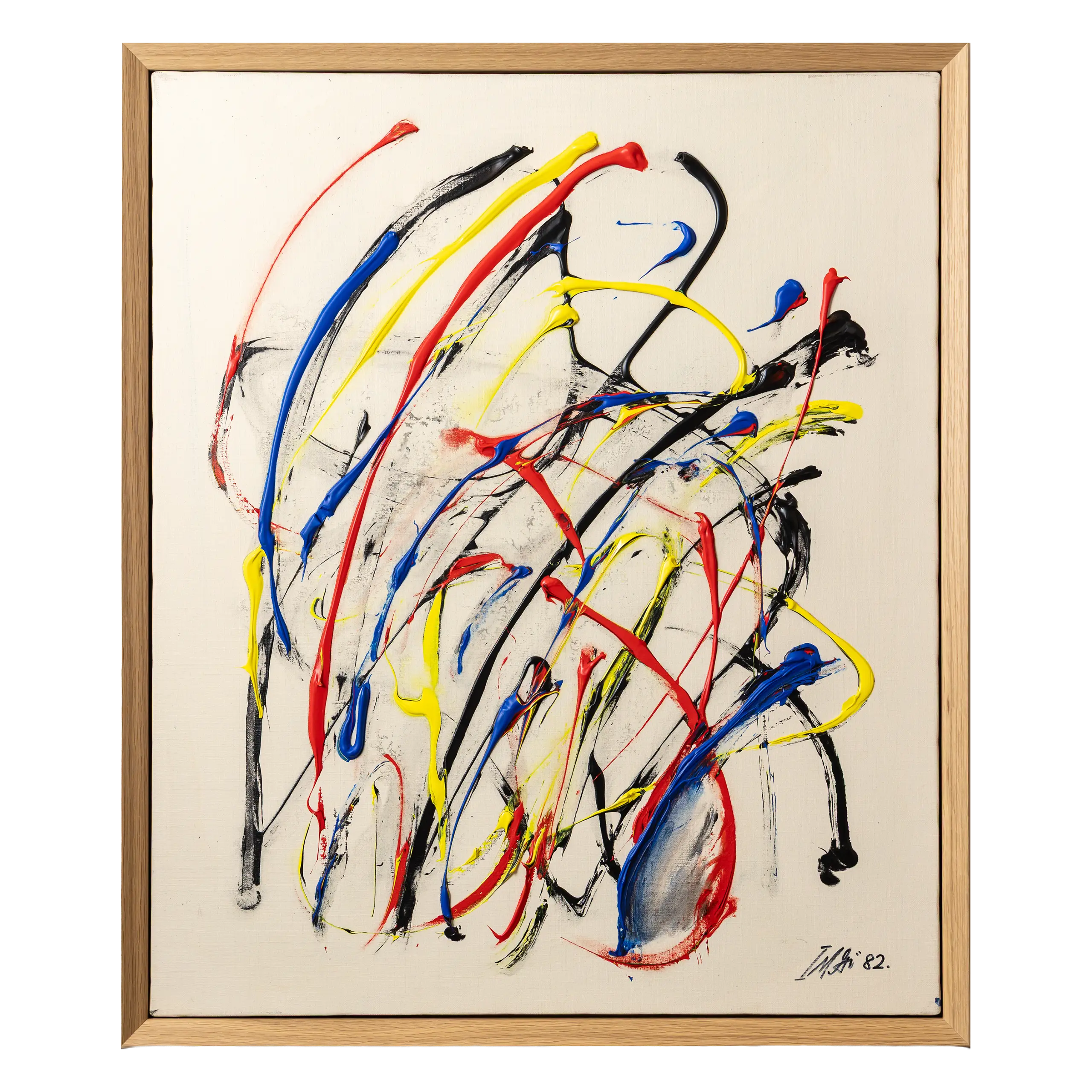
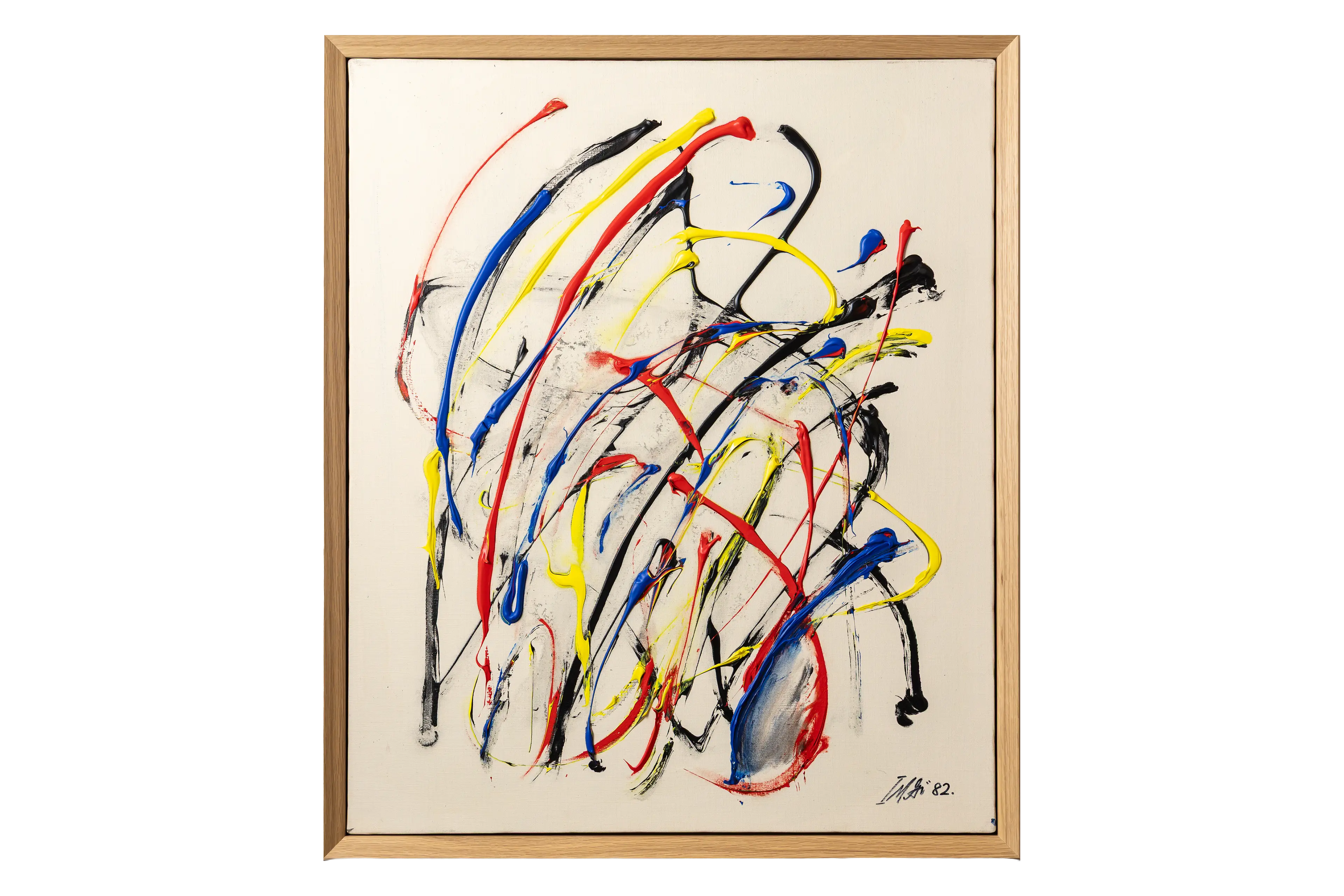
今井俊満(1928〜2002)は、ヨーロッパと日本を行き来しながら多彩な表現を追求した作家です。アンフォルメル運動に参加し、のちに「花鳥風月」や戦禍を主題とするシリーズへと、スタイルを大きく変化させながら制作を続けました。
今井は京都に生まれ、高校在学中から絵を描き始めました。1948年には新制作派協会展で入賞しています。1950年に東京芸術大学美術学部油絵科で派遣学生として学び、1951年には関西新制作派協会賞を受け、1952年に第1回フランス政府給費留学生として渡仏しました。パリではサム・フランシス、ミシェル・タピエらと交わり、アンフォルメル運動に参加するとともに、これを日本に展開しました。重厚なマチエールを線で覆う非具象の作風を確立した今井は、京都国立近代美術館所蔵の『夜の騎士』(1956年)、群馬県立近代美術館所蔵の『晩秋』(1956〜1957年)など、在仏期の作品を残しています。1957年にはパリのスタドラー画廊で個展を開き、1960年には第30回ヴェネツィア・ビエンナーレに出品しました。
1968年に帰国したあとも制作を続け、1970年の大阪万博では企業パビリオンの壁画やオブジェも手がけます。1983年頃からは日本の伝統美に着目した「花鳥風月」シリーズに着手し、東京国立近代美術館所蔵の『風立ちぬ』(1984年)や『深山流水図』(1985年)はその時期の仕事に属します。1990年代後半には「広島」「長崎」など、戦禍を主題とする絵画にも取り組みました。今井は時代ごとのサブカルにも積極的に興味を示し、作品にしています。2002年、73歳で死去しています。
Toshimitsu IMAI (1928–2002) was an artist who traveled between Europe and Japan and pursued a wide range of expression. He took part in the Art Informel movement and continued to work through major shifts in style, later turning to series on “Kacho Fugetsu” (flowers, birds, wind, and moon) and on the devastation of war.
Imai was born in Kyoto and began painting while still in high school. In 1948 he received an award at the Shin Seisaku-ha Association exhibition. In 1950 he studied as a dispatched student in the Department of Oil Painting in the Faculty of Fine Arts at Tokyo University of the Arts. In 1951 he received the Kansai Shin Seisaku-ha Association Prize, and in 1952 he went to France as one of the first recipients of a French government scholarship. In Paris he associated with Sam Francis, Michel Tapié, and others, joined the Art Informel movement, and developed it in Japan. Having established a nonfigurative style in which dense matière is covered with lines, Imai left works from his years in France such as Knight of the Night (1956), in the collection of the National Museum of Modern Art, Kyoto, and Late Autumn (1956–1957), in the collection of the Museum of Modern Art, Gunma. In 1957 he held a solo exhibition at Galerie Stadler in Paris, and in 1960 he exhibited at the 30th Venice Biennale.
After returning to Japan in 1968, he continued to work, and for Expo ’70 in Osaka he also produced murals and objects for corporate pavilions. Around 1983 he began the “Kacho Fugetsu” series, which looked to traditional Japanese beauty; The Wind Rises (1984) and Deep Mountains and Flowing Water (1985), both in the collection of the National Museum of Modern Art, Tokyo, belong to that period. In the late 1990s he also made paintings on the theme of wartime devastation, including works titled “Hiroshima” and “Nagasaki.” Imai took an active interest in the subcultures of each era and made them into works. He died in 2002 at the age of seventy-three.