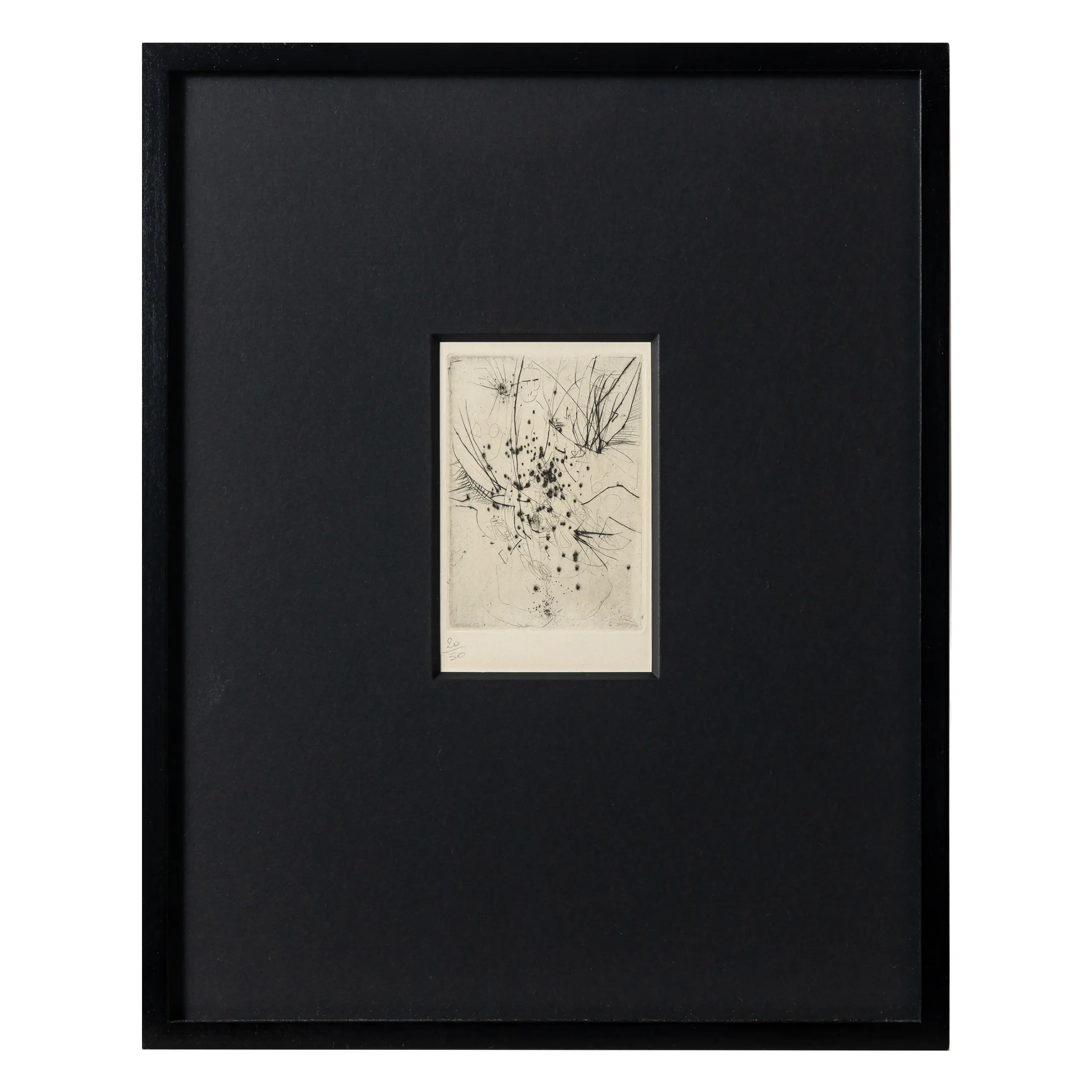
ヴォルス(1913〜1951)は、前衛美術運動「アンフォルメル」の中心的画家の一人です。ヴォルス(本名はアルフレート・オットー・ヴォルフガング・シュルツェ)はドイツ・ベルリンに生まれ、ドレスデンで育ちました。高校退学後、バウハウスでパウル・クレーの指導を短期間受けたのち、1932年に戦火を避けてパリへ移住しました。1937年からヴォルス(WOLS)の名を用い、当初は写真家として生計を立て、同年のパリ万国博覧会では公式フォトグラファーを務めました。
第二次世界大戦の勃発以降、ヴォルスは各地の収容所に収容されるなど過酷な境遇に直面しました。収容によってカメラが使えなくなった時期から、水彩やグアシュ、油彩、版画へと、制作の比重が移りました。『Gouache #16』(1940〜41年)は、魚や生物のような形が交錯する海景で、具象と抽象が重なる初期のグアシュです。油彩『Painting』(1946〜47年)では、細い線と色面が複雑に重なる抽象的な作品を制作しています。
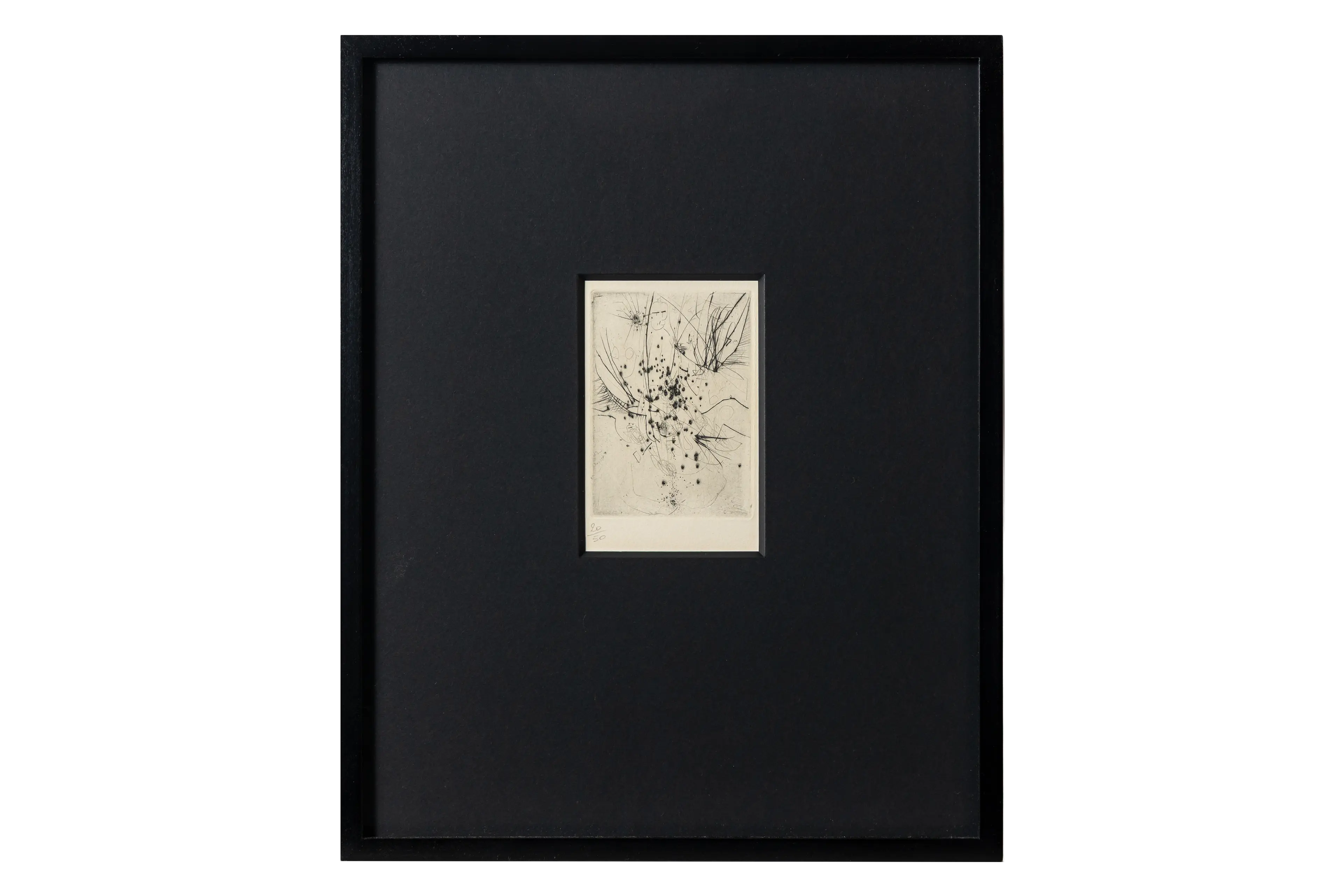
1945年と1947年には、ルネ・ドルーアン画廊(パリ)で個展を開きました。版画では、1948〜49年に制作された『三つのヴィネット「ヴォルス版画集」』や『大きなしみII「ヴォルス版画集」』など、ドライポイントによる小作品が知られ、愛知県美術館などに所蔵されています。ジャン=ポール・サルトルやルネ・ド・ソリエらの文芸書の挿絵も手がけ、文学と視覚の接点でも制作を続けました。
水彩の小品を数多く残し、油彩や版画とあわせて1940年代の表現を形づくりました。特定の画派や芸術運動に属していなかったヴォルスですが、戦後の主要な美術運動である「アンフォルメル」を代表する画家とされており、抽象表現主義の先駆者ともみなされています。1951年、パリで38歳の生涯を閉じました。
Wols (1913–1951) was one of the central painters of Art Informel, an avant-garde movement. Born Alfred Otto Wolfgang Schulze, Wols was born in Berlin, Germany, and grew up in Dresden. After leaving high school, he studied briefly under Paul Klee at the Bauhaus, then moved to Paris in 1932 to escape the war. From 1937 onward he worked under the name Wols (WOLS). He initially made his living as a photographer and served as an official photographer at the Paris Exposition of that year.
After the outbreak of World War II, Wols faced harsh conditions, including internment in camps in various locations. When he could no longer use a camera during internment, he shifted his focus to watercolor, gouache, oil painting, and printmaking. "Gouache #16" (1940–41) is an early gouache in which fish- and organism-like forms intersect in a seascape, blending representation and abstraction. In the oil painting "Painting" (1946–47), fine lines and fields of color overlap in a complex abstract composition.
He held solo exhibitions at Galerie René Drouin in Paris in 1945 and 1947. Among his prints, small drypoint works from 1948–49 are well known, including "Three Vignettes from "Prints of WOLS"" and "Big Stain II from "Prints of WOLS"." Works such as these are held in collections including the Aichi Prefectural Museum of Art. He also illustrated literary works by Jean-Paul Sartre, René de Solier, and others, continuing to work at the intersection of literature and visual art.
Wols left a large body of small watercolors, and together with his oil paintings and prints, these works shaped his practice in the 1940s. Although he did not belong to any particular school or movement, he is regarded as a painter who represents Art Informel, a major postwar movement, and is also considered a forerunner of Abstract Expressionism. He died in Paris in 1951, at the age of 38.