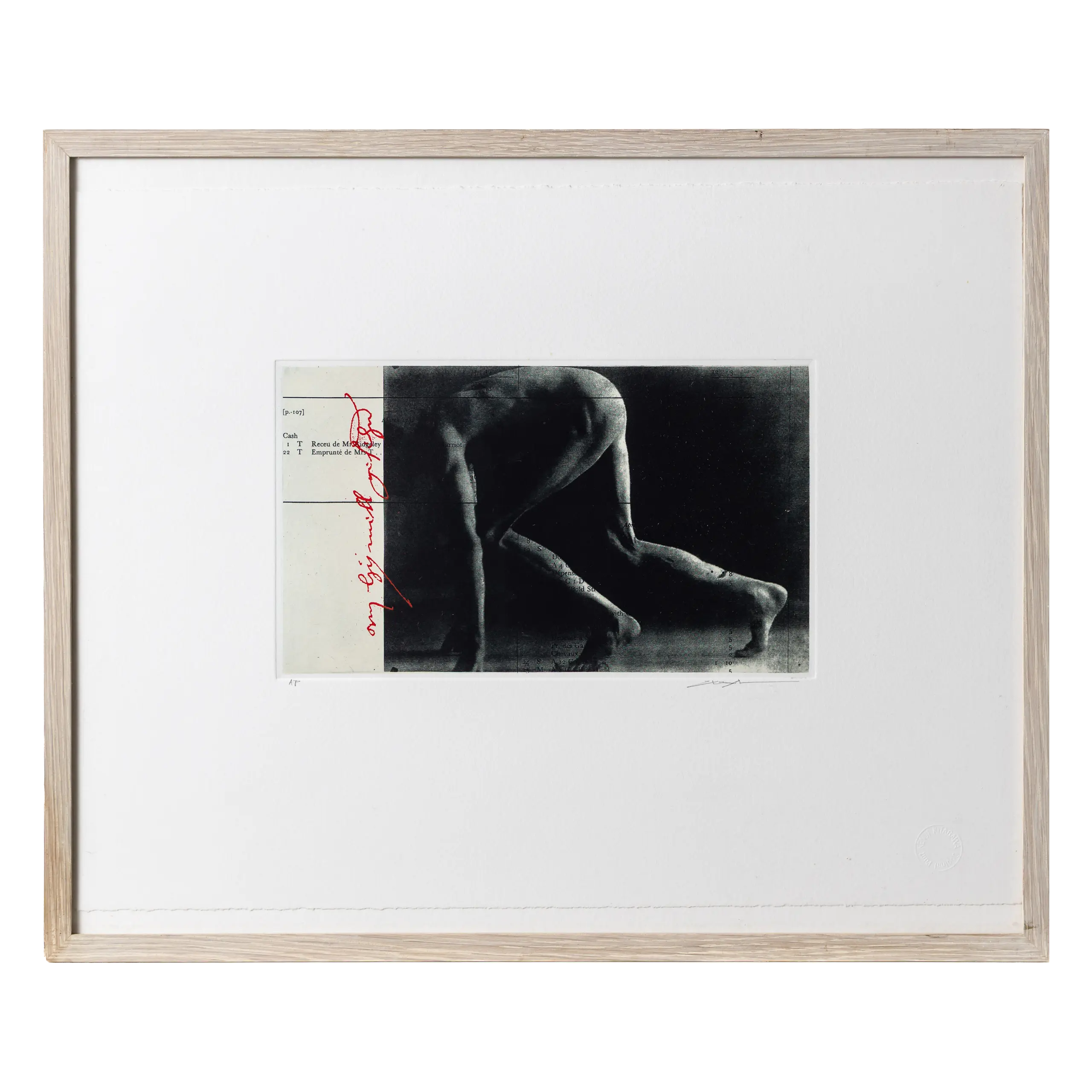
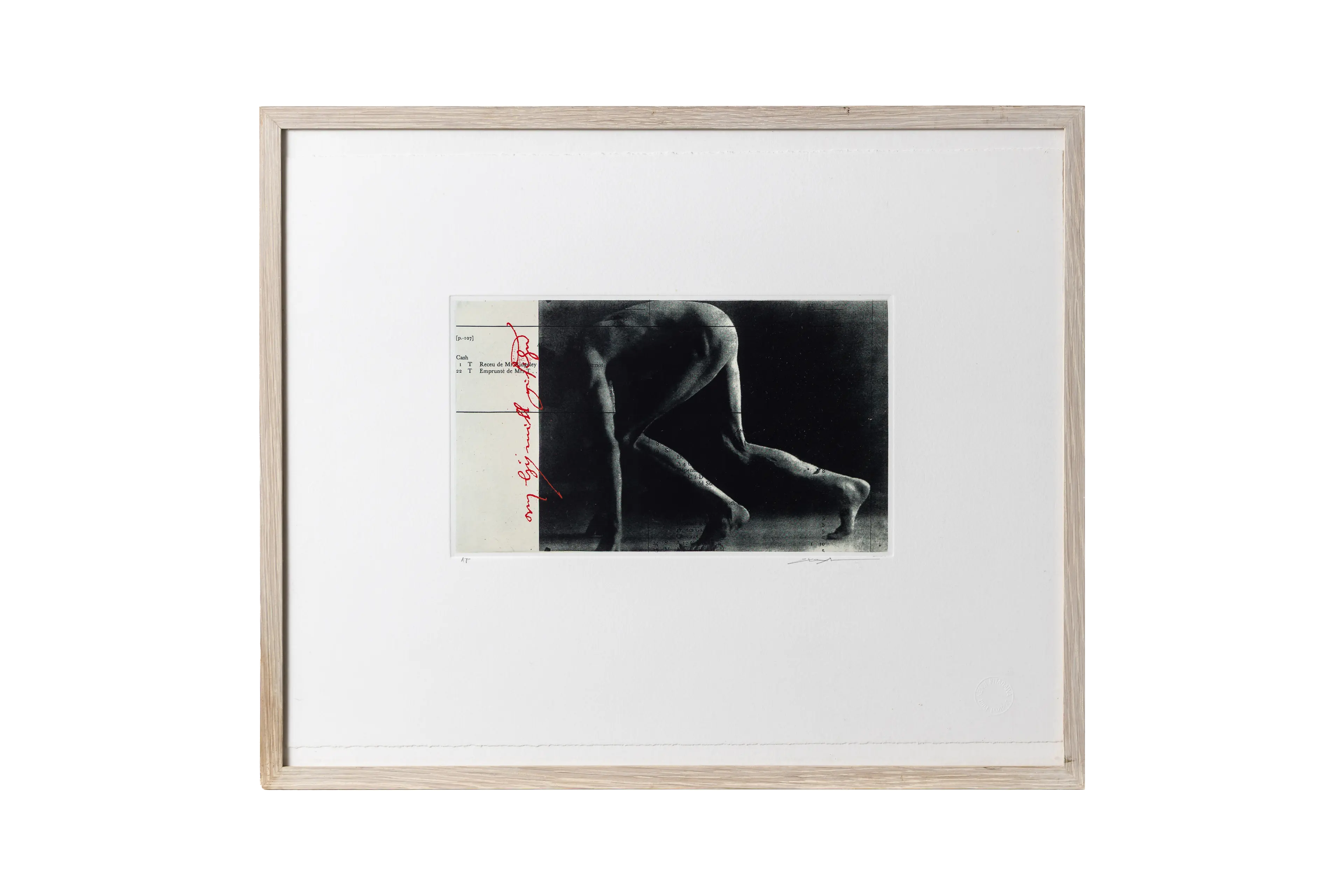
北川健次(1952〜)は、銅版を中心に活動する版画家です。エッチング、アクアチント、フォトグラヴュール(写真製版を用いた凹版)、ドライポイントなどを組み合わせ、文学や肖像、記憶を手がかりにした作品をつくっています。
福井県に生まれた北川は、多摩美術大学大学院美術研究科で美術を学びました。その後、銅版画の駒井哲郎に学び、 版画家の棟方志功やマルチアーティストの池田満寿夫に評価されて作家活動を開始しました。1975年に現代日本美術展ブリヂストン美術館賞受賞を受賞したのを皮切りに、1976年には東京国際版画ビエンナーレ展に招待出品、1981年にはリュブリアナ国際版画ビエンナーレ展に招待出品しています。1990年には文化庁派遣芸術家在外研修員として渡欧しています。版画だけでなく、油彩やコラージュのような平面作品、オブジェのような立体作品も手がけており、写真や詩、評論などにも取り組みました。
東京都現代美術館所蔵の『午後』(1975)は、エッチングとアクアチントによる初期の作例です。大阪中之島美術館所蔵の『カフカ』(1985)のように、文学者の名を題に据えた銅版も手がけています。展覧会では、東京都美術館の「日本銅版画史展」(1982)、栃木県立美術館の「観念の刻印〈1990 日本の版画・写真・立体〉」(1990〜91)、埼玉県立近代美術館の「果実の受胎 駒井哲郎と現代版画家群像」(1994)、渋谷区立松濤美術館の「版画の1970年代」(1996)などに出品しています。
2000年代にはフォトグラヴュールを前面に出した連作も展開しました。国立国際美術館所蔵の『池田満寿夫の肖像-秘められた記憶に』(2003)、徳島県立近代美術館所蔵の版画集『反対称/鏡/蝶番 夢の通路-VERO DODATを通り抜ける試み』(2004)がその例です。北川は銅版画やオブジェ、コラージュの分野の第一人者と評されており、その詩的な感性と高いデザイン性は国内外問わず高く評価されています。
Kenji KITAGAWA (born 1952) is a printmaker who works primarily in copperplate. Combining etching, aquatint, photogravure (intaglio using photographic processes), drypoint, and related techniques, he makes works that take literature, portraiture, and memory as points of departure.
Born in Fukui Prefecture, Kitagawa studied art in the graduate school of Tama Art University. He then studied copperplate printmaking with Tetsuro KOMAI and began his career with the recognition of the printmaker Shiko MUNAKATA and the multi-disciplinary artist Masuo IKEDA. After receiving the Bridgestone Museum of Art Prize at the Contemporary Art Exhibition of Japan in 1975, he was an invited exhibitor at the Tokyo International Print Biennale in 1976 and at the Ljubljana International Print Biennale in 1981. In 1990 he traveled to Europe as an Agency for Cultural Affairs artist fellow. Beyond prints, he has also made two-dimensional works such as oils and collages, three-dimensional works such as objets, and has worked in photography, poetry, and criticism.
Afternoon (1975), held by the Museum of Contemporary Art Tokyo, is an early example in etching and aquatint. He has also made copperplates titled after writers, such as Kafka (1985), held by the Nakanoshima Museum of Art, Osaka. His exhibition record includes “A history of Japanese copperplate prints” at the Tokyo Metropolitan Art Museum (1982), “The imprinted ideas: 1990 Japanese prints, photographs, and sculpture” at the Tochigi Prefectural Museum of Fine Arts (1990–91), “Conception of fruit: Tetsuro Komai and contemporary printmakers” at the Museum of Modern Art, Saitama (1994), and “Prints of the 1970s” at the Shoto Museum of Art (1996).
In the 2000s he also developed series that foreground photogravure. Examples include Portrait of Masuo Ikeda: To an Enshrined Memory (2003), held by the National Museum of Art, Osaka, and the print portfolio Antisymmetry / Mirror / Hinge: Dream Passage—An Attempt to Pass through Véro-Dodat (2004), held by the Tokushima Modern Art Museum. Kitagawa is regarded as a leading figure in copperplate printmaking, objets, and collage, and his poetic sensibility and strong sense of design have been widely recognized in Japan and abroad.