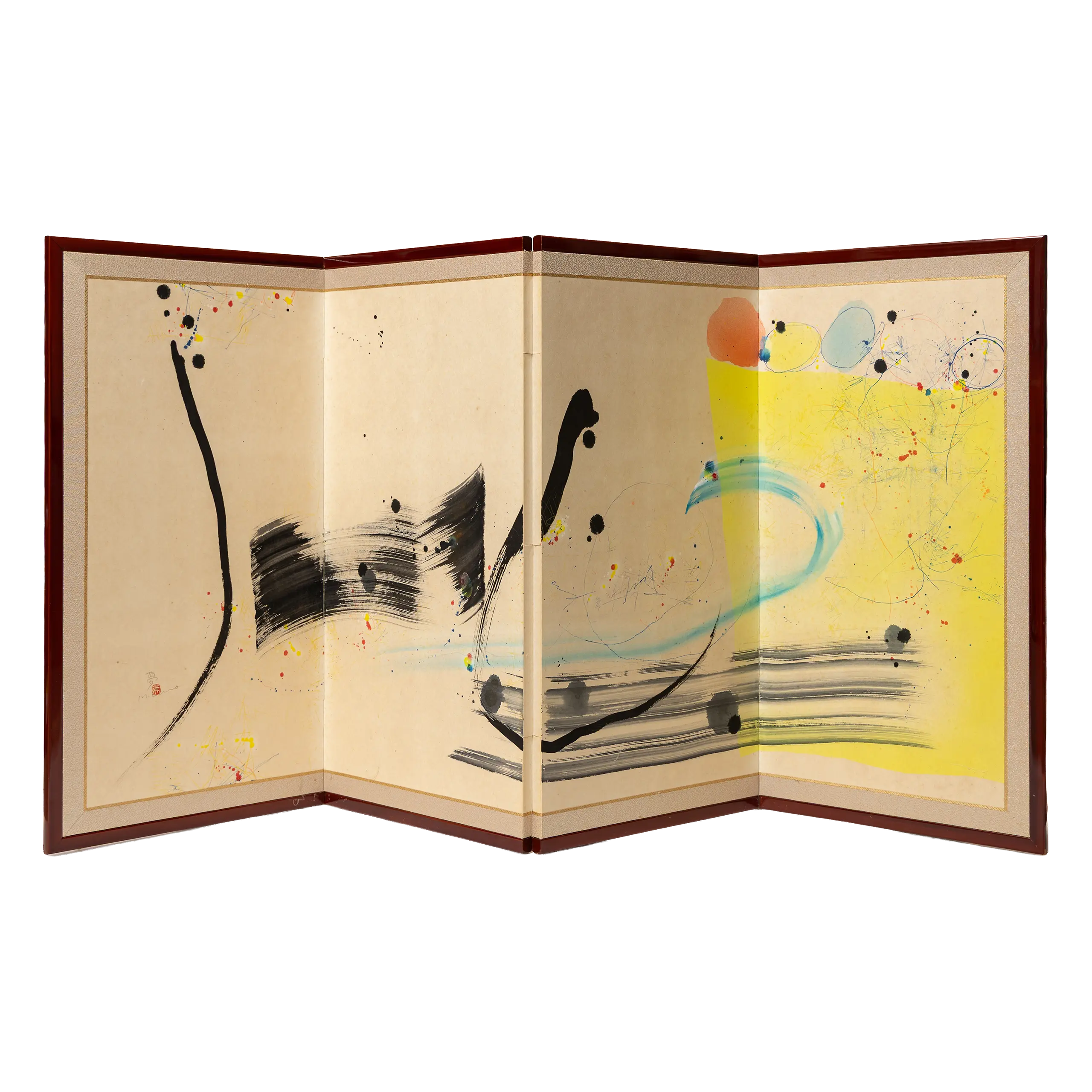
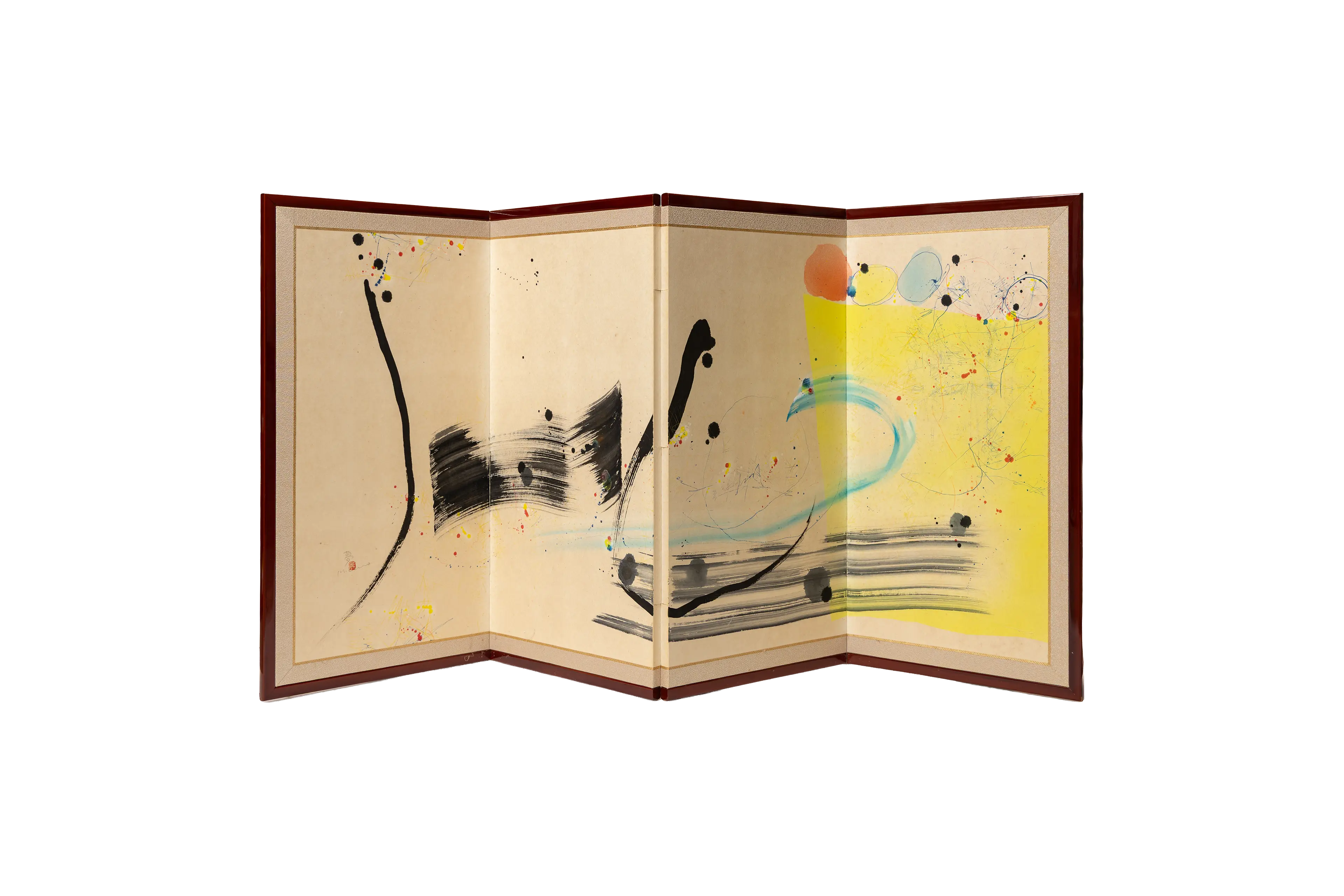
吉原通雄(1933〜1996)は現代美術家です。兵庫県芦屋市生まれ。同じく美術家である吉原治良の次男として育ちました。関西学院大学在学中の1954年に具体美術協会の結成に参加し、第1回展から第21回展まで毎回出品するなど、具体美術協会の解散まで継続して活動しました。
初期には、砂や石、コールタールなど自然の素材を用いて、大地をテーマとした制作を進めました。1958年に大阪で開催された第2回「舞台を使用する具体美術」では、美術と舞踏とを融合させた「ロック・アラウンド・ザ・クロック」を演出するなど、絵画にとどまらないクリエイティビティを発揮しました。これは現在のインスタレーションの先駆けと目されています。
その後、制作のスタイルを大きく転換します。紙テープや色紙、アクリル絵具などの色彩に富んだ素材や、蛍光管を用いたライトアートを試み、色と幾何学とを組み合わせた画面を構成するようになります。さらに、60年代前半からスプレーを用いたアクションペインティングを展開するなど、多彩な創作活動を行いました。
1965年には、オランダとドイツの前衛グループ「ヌル」が主宰するヌル国際展に具体が招かれ、父である治良とともにアムステルダムのステデライク美術館へ赴き、展示にあたりました。具体美術協会解散後は発表を控える期間が続き、90年代に活動を再開しましたが、1996年に死去しました。吉原通雄の作品は東京都現代美術館、兵庫県立美術館、宮城県美術館、大阪中之島美術館などにも所蔵されています。
Michio YOSHIHARA (1933–1996) was a contemporary artist. Born in Ashiya, Hyogo Prefecture, he grew up as the second son of the artist Jiro YOSHIHARA. While studying at Kwansei Gakuin University, he took part in the founding of the Gutai Art Association in 1954 and continued to work with the group until it disbanded, exhibiting in every show from the first through the twenty-first.
In his early years, he used natural materials such as sand, stone, and coal tar to make works themed around the earth. At the second “Gutai Art Using the Stage” presentation held in Osaka in 1958, he directed “Rock Around the Clock,” which fused art and dance, showing creativity that went beyond painting. This work is regarded as a forerunner of contemporary installation.
He later changed his approach markedly. He experimented with richly colored materials such as paper tape, colored paper, and acrylic paint, as well as light art using fluorescent tubes, and began composing surfaces that combined color and geometry. From the early 1960s he also pursued spray-based action painting, working across a wide range of practices.
In 1965, Gutai was invited to the Nul international exhibition organized by the Dutch and German avant-garde group Nul. Yoshihara traveled with his father, Jiro, to the Stedelijk Museum in Amsterdam and took part in the installation. After the Gutai Art Association disbanded, he refrained from exhibiting, then resumed his practice in the 1990s. He died in 1996. His works are held by institutions including the Museum of Contemporary Art Tokyo, the Hyogo Prefectural Museum of Art, the Miyagi Museum of Art, and the Nakanoshima Museum of Art, Osaka.