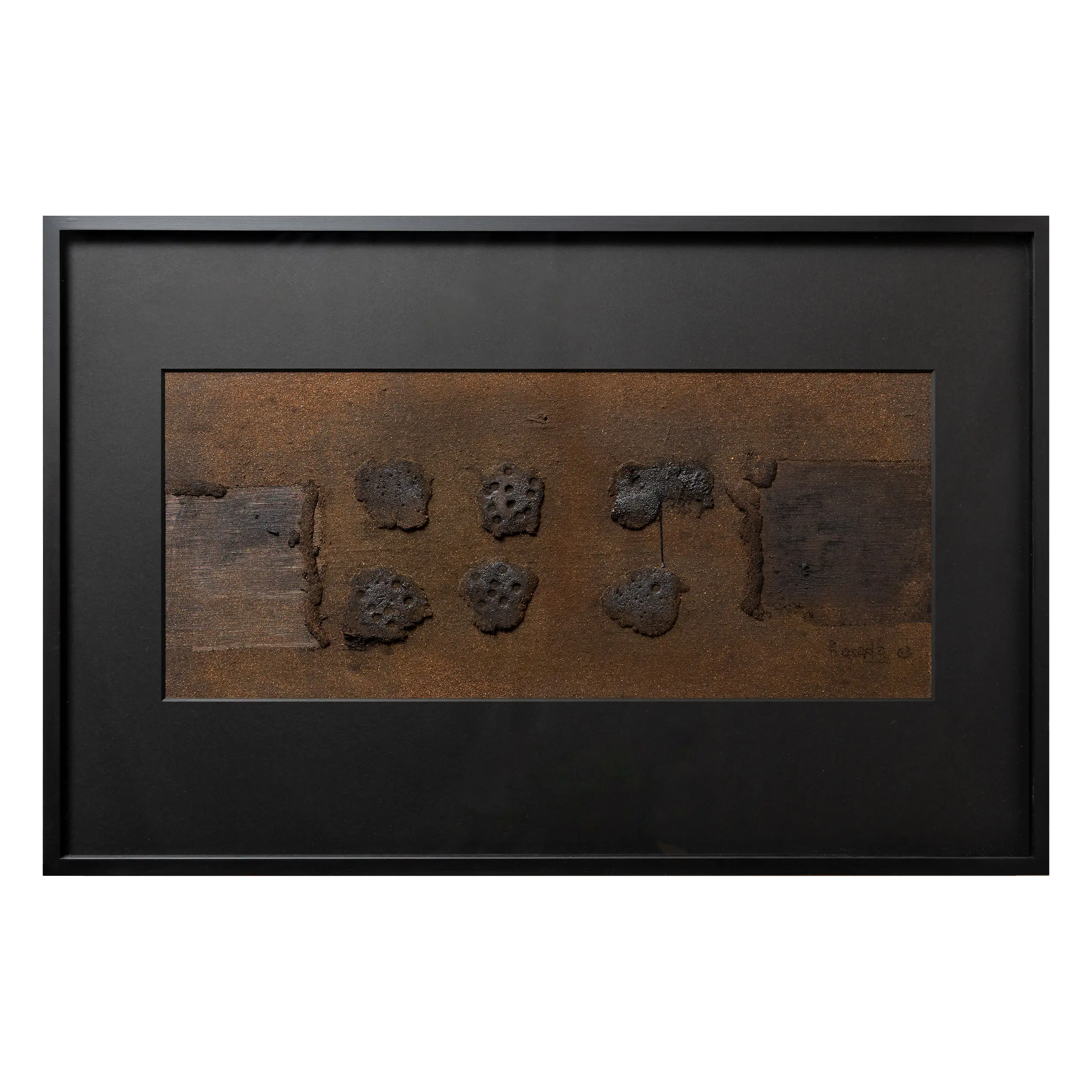
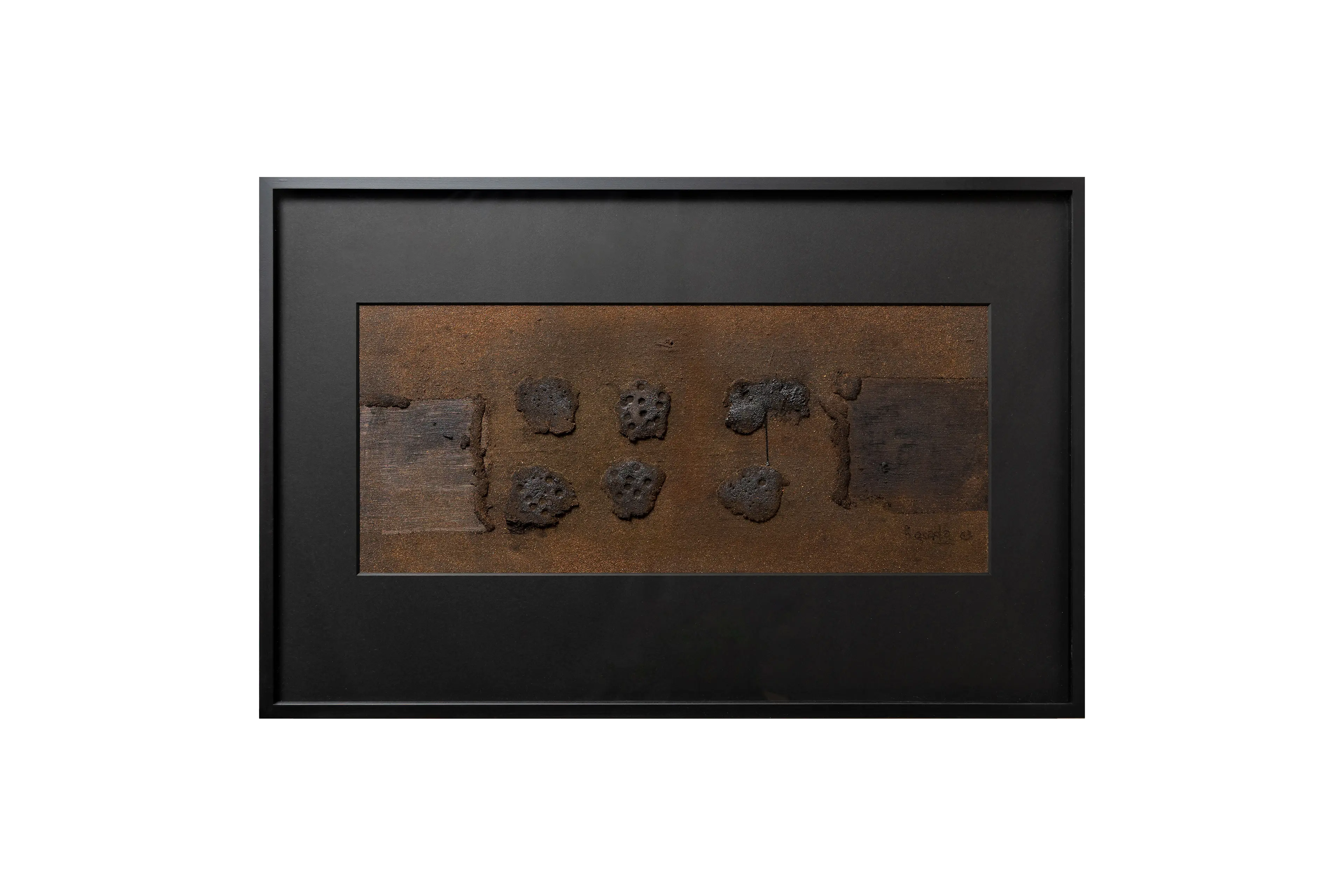
麻田浩(1931~1997)は、松本清張(1909~1992)や中上健次(1946~1992)などの小説の表紙画でも知られる、京都出身の西洋画家です。
父は日展の重鎮だった日本画家の麻田辨自(べんじ・1900~1984)、兄は同じく日本画家の麻田鷹司(たかし・1928~1987)という美術一家に生まれますが、麻田自身は画家の厳しさを父に諭され、当初は同志社大学で経済学を学んでいました。しかし、同大学の絵画サークル「鞍馬画会」で創作活動に勤しみながら、新制作協会の新鋭として頭角を現していた桑田道夫(1916~2002)に師事するなど、絵画への関心はむしろ強まっていくばかりでした。
在学中の1954年には、桑田のすすめで第18回新制作協会展に出品し、初入選を果たしています。大学卒業後は大丸京都店に就職しますが、創作への熱は冷めることなく、新制作協会展のほか、朝日新人展やシェル美術賞展などに作品を発表し続けます。1962年になると、いよいよ画家として生きていく決意を固めた麻田は大丸を退職し、翌年には父や兄とともにヨーロッパに渡り、その風土と美術から刺激を大いに受けました。特に1950年代の初期作品には、油彩に紙粘土を組み合わせるといったアンフォルメルへの志向が見られますが、1960年代後半から1970年代前半にかけては、新制作協会への出品を重ねるなかでシュルレアリスム的な具象画へと移行しており、周囲の変化に影響を受けながら、独自の表現を模索している様子が窺えます。
麻田の新たな画境は、1971年から11年あまりの長期にわたって滞在したヨーロッパで切り拓かれていきます。はじめこそ制作に集中できない日々が続いたものの、翌年からは、かねてより注目していたジョニー・フリードランデル(1912~1992)主宰の版画研究所に参加し、本格的に色彩銅版画を学び始めます。制作した銅版画作品は、パリを中心にヨーロッパで高い評価を得て、版画集の出版や展覧会の開催へとつながりました。これを契機に絵画の制作も軌道に乗り、1973年から手がけだした幻想的な風景画は、麻田の画業を象徴する「原風景」シリーズへと結実します。こうしたヨーロッパでの活動と並行して、日本国内の展覧会に作品を送り届けていたことも、芸術家としての麻田の気概を感じさせます。
しかし、その旺盛な制作により体調を崩した麻田は、1982年に京都へ戻ります。滞欧時の活躍が認められ、翌年から京都市立芸術大学美術学部西洋画科の教授に就任しますが、創作活動はとどまることなく、いよいよ深化していきます。人工的なモチーフを題材にした「原都市」という新たなテーマは、自然物を描いた「原風景」と組み合わさり、【地・洪水のあと】(1985~86)という大作へと到達しました。まさにキリスト教的な主題を扱ったこの作品の裏側には、旧約聖書の「伝道の道」第1章の冒頭一節が書きこまれているように、晩年の麻田は宗教的なテーマへと傾倒し、深遠さや厳粛さをたたえた独自の世界を築きあげていきました。心身を削りながら生みだし続けた一連の作品には、彼の深い精神性や研ぎ澄まされた感覚が凝縮されており、今もなお観る者すべてを魅惑的な内面世界へと誘います。
Hiroshi Asada (1931-1997) was a Western-style painter from Kyoto, known for his cover art for novels by writers such as Seicho Matsumoto (1909-1992) and Kenji Nakagami (1946-1992).
He was born into an artistic family: his father, Benji Asada (1900-1984), was a prominent Japanese-style painter in the Nitten exhibition, and his older brother, Takashi Asada (1928-1987), was also a Japanese-style painter. Despite this heritage, after his father admonished him about the rigors of being a painter, he first studied economics at Doshisha University. However, his interest in painting only grew stronger, especially through his involvement in the university’s painting circle “Kurama Art Association” and under the mentorship of Michio Kuwada (1916-2002), a rising artist in the Shinseisaku Association.
In 1954, while still a student, Asada submitted a piece to the 18th Shinseisaku Association Exhibition at Kuwada’s suggestion and achieved his first acceptance. After graduating, he worked at the Daimaru Kyoto store but continued to exhibit his works in various exhibitions, such as the Shinseisaku Association Exhibition, the Asahi Newcomer Exhibition, and the Shell Art Award Exhibition. In 1962, he decided to fully commit to being a painter and left Daimaru. The following year, he traveled to Europe with his father and brother, where he was greatly inspired by the local culture and art. Particularly in his early works from the 1950s, there is a tendency toward informel, such as combining oil paint with papier-mâché. However, from the late 1960s to the early 1970s, as he continued to exhibit at the Shinseisaku Association Exhibition, his art shifted to surrealist figurative paintings. We can see how he was exploring his own unique expressions while being influenced by changes in his surroundings.
Asada’ new artistic phase was significantly developed during his over 11-year stay in Europe starting in 1971. Initially, he struggled to focus on his work, but the following year, he joined a printmaking institute led by Johnny Friedlander (1912-1992), whom he had long admired, and began to study color copperplate engraving in earnest. The copperplate prints he produced were highly acclaimed in Paris and throughout Europe, leading to the publication of print collections and the holding of exhibitions. This success also boosted his painting career, and the fantastic landscapes he began working on in 1973 culminated in his creation of the “Primal Landscape” series, which symbolizes his artistry. Despite his active engagement in Europe, Asada continued to submit works to exhibitions in Japan, showcasing his determination as an artist.
However, due to health issues brought on by his intense work, Asada returned to Kyoto in 1982. Recognized for his achievements during his time in Europe, he was appointed as a professor in the Department of Western Painting at Kyoto City University of Arts the following year. Yet, his creative activities did not wane but rather deepened. A new theme, “Primal Cities”, featuring artificial motifs, emerged and combined with his “Primal Landscape” series to produce significant works like “Earth: After the Flood” (1985-86). In his later years, Asada became deeply committed to religious themes, developing his own world of profundity and solemnity. This is exemplified by the opening verse of the first chapter of Ecclesiastes from the Old Testament, inscribed on the back of this work, which deals with a distinctly Christian theme. The series of works that he continued to create while wearing down his body and soul are a condensation of his deep spirituality and well-honed senses, and even now invite all viewers into his fascinating inner world.