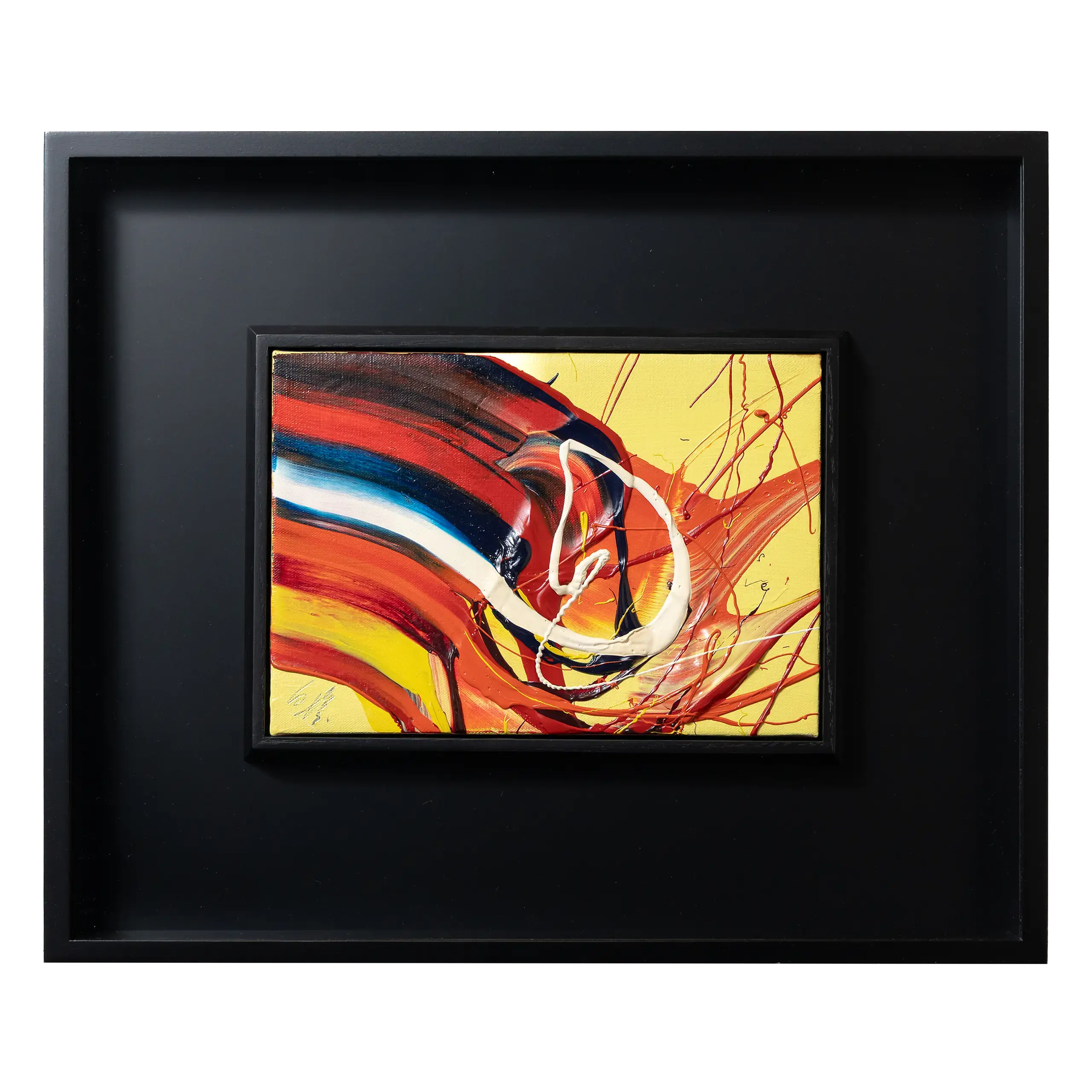
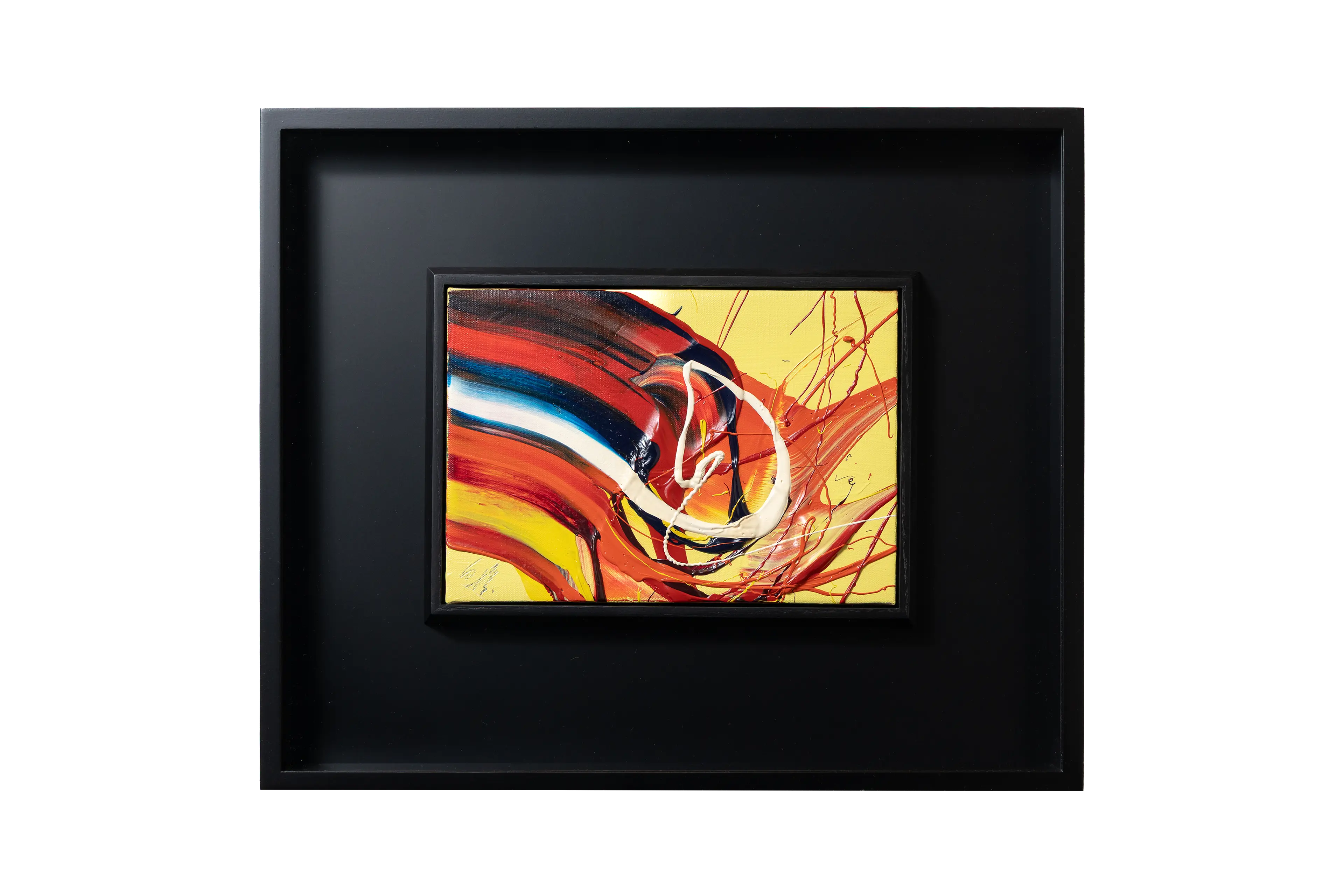
白髪一雄は「具体美術協会」を代表する作家の一人であり、日本におけるアクション・ペインティングの先駆者としても知られています。天井から吊るされたロープにぶら下がって滑走し、床に広げたキャンバスに素足で描くという白髪独自の画法は、絵具の質感と制作の軌跡を生々しく残し、迫力に満ちた画面を生み出しました。
1924年、兵庫県尼崎市に生まれた白髪は幼少期から絵画に関心を持ち、京都市立絵画専門学校で日本画を学びます。その後は洋画に転向するも、1952年に村上三郎、田中敦子、金山明らと「0会」を結成してからは、より先鋭的な表現を追求していきました。この頃には、絵筆を用いず足で絵具を踏み広げるという手法をすでに取り入れていました。1955年、先述の3名とともに「具体美術協会」に加入すると、足で描く作品のほか、泥の山に飛びこんで格闘したり、円錐状に組み上げた丸太を斧で切りつけたりといったパフォーマンスでも注目を集めます。1960年代後半頃から密教に関心を持ち始め、1971年に比叡山延暦寺にて得度します。「具体美術協会」解散後の作品には、修行で培った深い精神性が窺われるようになります。この頃、素足ではなく、スキージという長いヘラを用いるようになりますが、その後は代名詞であるフット・ペインティングへと回帰していきました。
身体の躍動感や行為の痕跡が刻みつけられた白髪の作品は、鑑賞者を圧倒するエネルギーにあふれ、国際的にも高い評価を受けています。
Kazuo SHIRAGA was one of the artists who came to represent the Gutai Art Association (Gutai) and is known as a pioneer of action painting in Japan. His distinctive method—suspending himself from a rope hung from the ceiling, gliding above a canvas spread on the floor, and painting barefoot—left the texture of the paint and the trajectory of his process vividly apparent, producing images filled with force.
Born in 1924 in Amagasaki, Hyogo Prefecture, Shiraga became interested in painting at an early age. He studied Nihonga (traditional Japanese-style painting) at the Kyoto Municipal College of Painting and subsequently turned to Western-style painting. In 1952, pursuing more radical modes of expression, he formed the 0-kai with Saburo MURAKAMI, Atsuko TANAKA, and Akira KANAYAMA. By then he was already painting without brushes, spreading pigment with his feet. In 1955, he joined the Gutai Art Association with those three artists. In addition to foot painting, he attracted attention through performances such as diving into mounds of mud and wrestling in them, and chopping conically assembled logs with an axe.
From the late 1960s onward, Shiraga turned his interest to esoteric Buddhism. In 1971 he was ordained at Enryaku-ji on Mount Hiei. After the Gutai Art Association was dissolved, the deep spirituality he had cultivated through his training became increasingly apparent in his work. During this period he adopted a long squeegee in place of painting with his bare feet, but he later returned to the foot painting that had become synonymous with his practice.
Shiraga's works, imbued with the dynamism of the body and the marks left by his actions, convey an energy that overwhelms viewers and have earned high international acclaim.