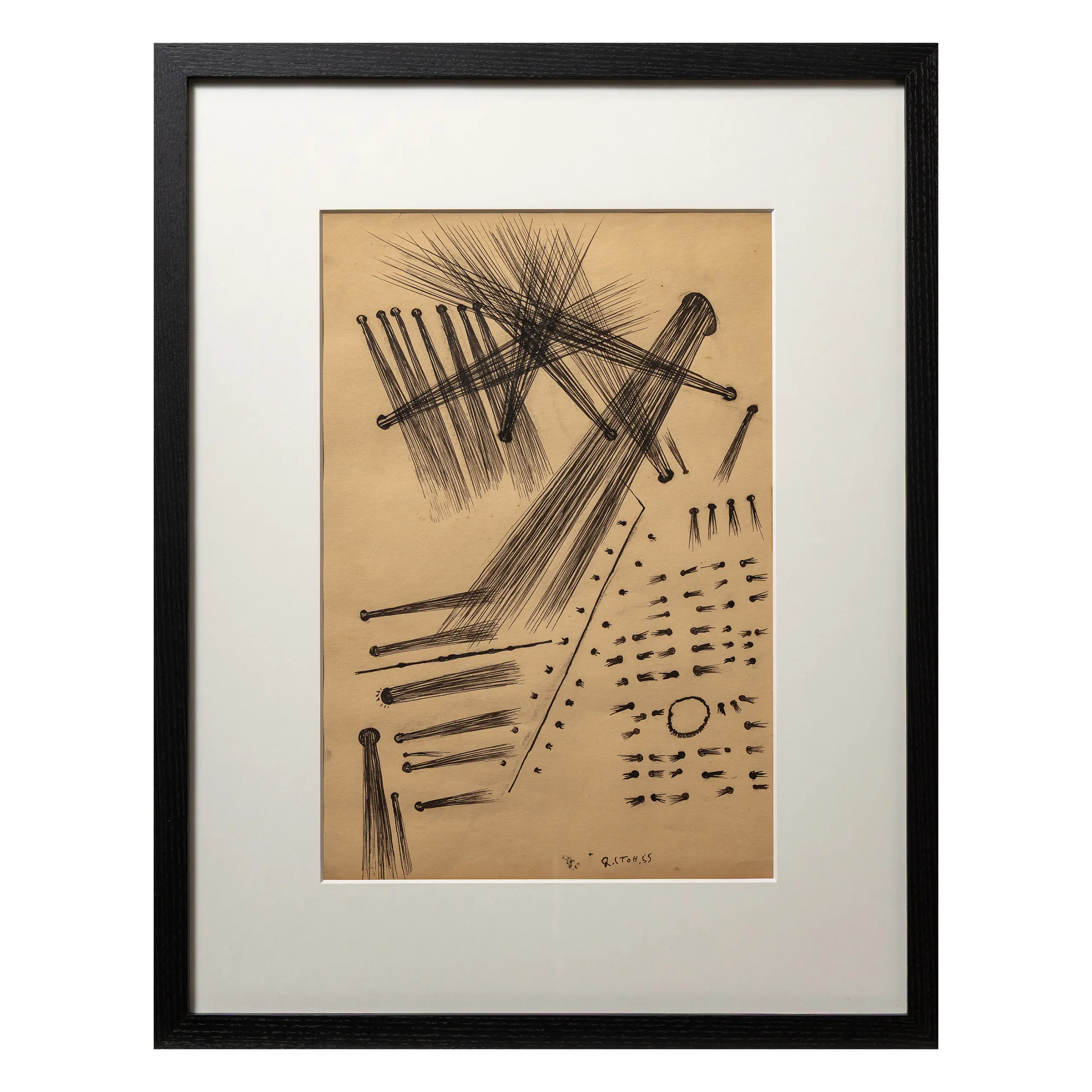
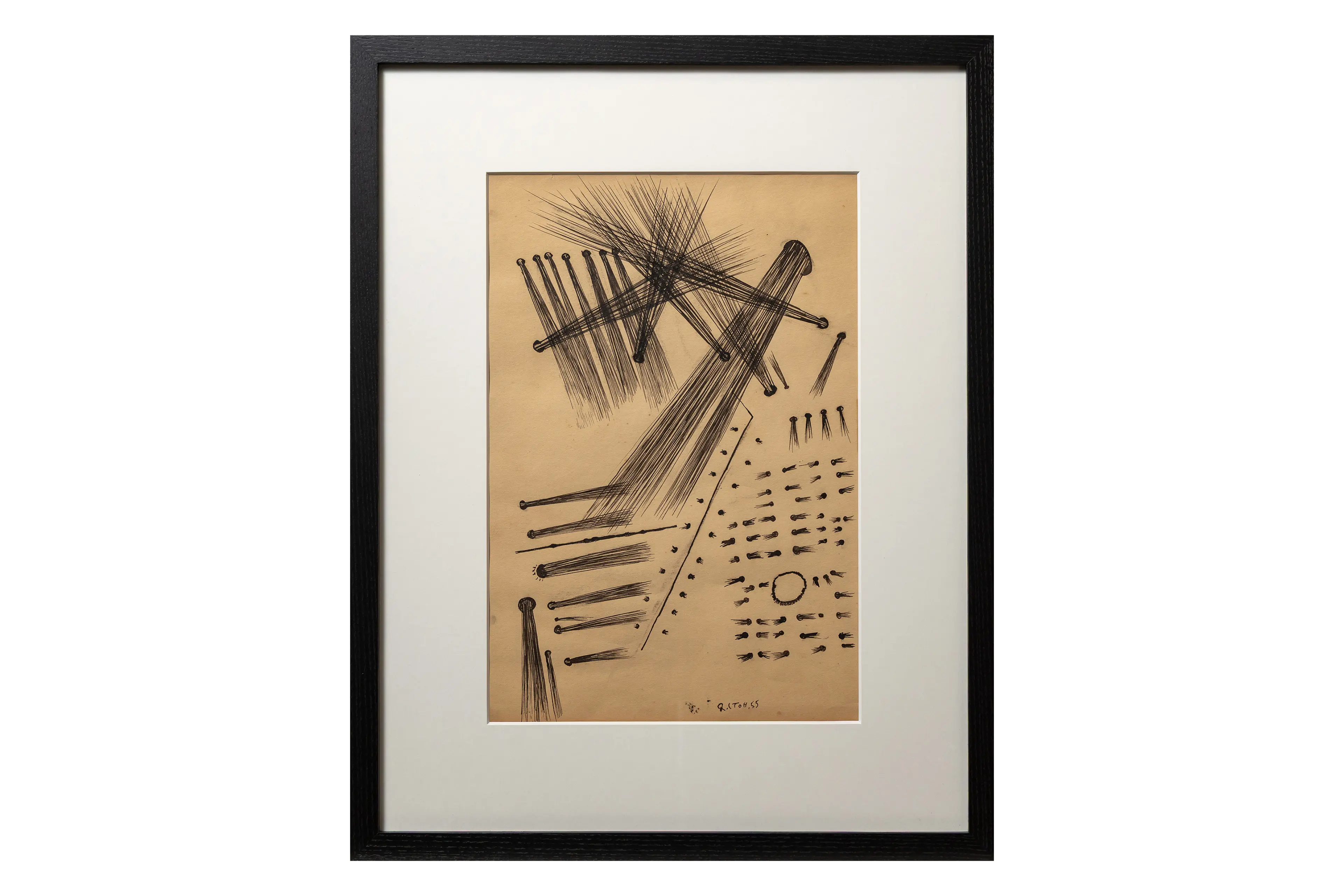
伊藤久三郎は京都市下京区で生まれ、京都市立絵画専門学校(現・京都市立芸術大学)で日本画を専攻。卒業後に上京して洋画(油彩)へと転向し、「一九三〇年協会洋画研究所」で研鑽を積みました。戦前は二科展を舞台に、先鋭的な「九室会」の一員として頭角を現します。戦後は活動の拠点を京都に戻し「行動美術協会」の会員として精力的に活動。京都画壇における抽象絵画運動の先駆けとなりました。
伊藤は日本画の素養を持ちながら、西洋のシュルレアリスムを独自に消化し、戦前から戦後にかけて「日本人の手による前衛」を追求し続けました。その作品は「透明感のある儚さ」が特徴です。光沢を抑えた日本画特有の質感を油彩に取り入れることで、清冽な印象の画面を作り上げました。戦前は、帽子や振り子といった静物のモチーフを組み合わせた、シュルレアリスムの影響を感じさせる画風を展開していました。しかし大戦が始まると、一見穏やかで明るい色彩の中にも寂寥感が潜む世界観へと変容します。戦後は、次第に形態を単純化させ、色彩とリズムを重視した独自の抽象画へと進化しました。
伊藤が到達した「抒情的抽象」は、西洋の模倣からの脱却と再構築を、個人レベルで成し遂げた稀有な例と言えます。一方で、画壇と一定の距離を置き、独自の道を歩み続けたその姿勢は、同時代の「具体」のような華々しいムーブメントの影で、彼を美術史における孤高の存在として留まらせることとなりました。
Ito Kyuzaburo was born in Shimogyo Ward, Kyoto, and trained in Japanese painting at the Kyoto Municipal School of Painting (now Kyoto City University of Arts). After graduating, he moved to Tokyo and turned his attention to Western-style oil painting, honing his skills at the 1930 Association Western Painting Research Institute. Before the war, he rose to prominence as a member of the avant-garde "Kyushitsu-kai" group, exhibiting primarily at the Nika Exhibition. In the post-war period, he returned to his roots in Kyoto, becoming a prolific member of the Action Art Association and a pioneer of the abstract movement within the Kyoto art scene.
While grounded in traditional Japanese techniques, Ito uniquely assimilated Western Surrealism, steadfastly pursuing a vision of "avant-garde art by Japanese hands" throughout his career. His works are characterised by a "translucent ephemerality," achieved by incorporating the subdued lustre and distinctive textures of Japanese painting into the medium of oil. This resulted in compositions of striking clarity. His pre-war style was heavily influenced by Surrealism, featuring motifs such as hats and pendulums; however, with the onset of the war, his worldview shifted, revealing a palpable sense of desolation beneath seemingly calm, bright colours. Following the war, he gradually simplified his forms, evolving towards a unique abstract style that emphasised colour and rhythm.
Ito’s achievement of "lyrical abstraction" represents a rare instance of an artist transcending Western imitation to reconstruct a personal artistic language. Yet, because he maintained a degree of distance from mainstream art circles to pursue his own path, he was often overshadowed by more dominant movements of the era, such as Gutai. As a result, he remains a distinctly solitary figure in art history.